
Preempting Falls in Construction: The Critical Role of Fall Protection Equipment
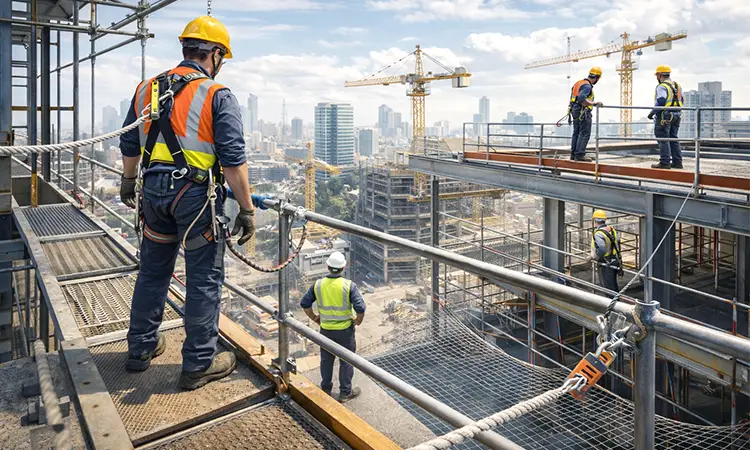
Among all construction site hazards, falls from height remain the leading cause of serious injuries and fatalities worldwide. Whether during structural work, roofing, formwork, scaffolding, or façade installation, working at height exposes personnel to significant risk. The dynamic nature of construction sites—constantly changing elevations, temporary platforms, and simultaneous operations—further amplifies this danger. Preempting falls, therefore, is not merely a safety objective but a life-saving necessity.
Understanding Fall Hazards in Construction
Fall hazards arise whenever work is carried out at elevated locations or near unprotected edges. Open floor edges, fragile roofs, incomplete stairways, leading edges, floor openings, and improper access systems are common contributors. Additionally, environmental factors such as rain, wind, dust, and poor lighting increase the likelihood of slips and missteps. Identifying these hazards through systematic risk assessments is the foundation of effective fall prevention.
Hierarchy of Controls for Fall Prevention
An effective fall protection strategy follows the hierarchy of controls—elimination, substitution, engineering controls, administrative controls, and personal protective equipment (PPE). Wherever possible, work at height should be eliminated or reduced by prefabrication at ground level. When elevation is unavoidable, engineering controls such as guardrails, toe boards, safety nets, and covered openings must be prioritized over individual protective measures.
Collective Protection Systems
Collective fall protection systems are designed to safeguard multiple workers simultaneously without requiring individual action. Guardrails around edges and openings, properly erected scaffolding with mid-rails and toe boards, and safety nets installed below work areas provide continuous protection. These systems are particularly effective as they reduce dependency on human behaviour and ensure consistent safety even in high-activity zones.
Personal Fall Protection Equipment
When collective protection is impractical, personal fall protection equipment becomes essential. This includes full-body harnesses, lanyards, energy absorbers, lifelines, and anchorage points. A complete fall arrest system must be correctly designed to limit free fall distance, arrest forces, and clearance requirements. Improper anchorage or incompatible components can render even certified equipment ineffective. Hence, selection and system compatibility are critical.
Importance of Proper Anchorage and Lifeline Systems
Anchorage points form the backbone of any personal fall arrest system. They must be capable of withstanding specified loads and be positioned to minimise swing falls. Horizontal and vertical lifeline systems allow workers greater mobility while maintaining continuous tie-off. These systems must be designed and installed by competent professionals and inspected regularly to ensure integrity.
Training and Competency of Workmen
Fall protection equipment is only as effective as the person using it. Comprehensive training is essential to ensure that workers understand hazard identification, correct donning of harnesses, inspection of equipment, and emergency procedures following a fall. Supervisors must ensure that only trained and authorised personnel undertake work at height. Regular refresher training helps reinforce correct practices and address complacency.
Inspection, Maintenance, and Compliance
Fall protection equipment is subject to wear, environmental exposure, and mechanical stress. Routine pre-use checks by workers, along with periodic detailed inspections by competent persons, are mandatory. Any damaged or expired equipment must be immediately withdrawn from service. Compliance with national standards and project-specific safety requirements ensures reliability and legal conformity.
Emergency Preparedness and Rescue Planning
A fall arrest system is incomplete without a well-defined rescue plan. Suspension trauma can become life-threatening if a fallen worker is not rescued promptly. Rescue procedures, equipment availability, and trained response teams must be established before commencing work at height. Mock drills and simulations help ensure preparedness in real-life situations.
India-Specific Regulations and Standards for Fall Protection
In India, fall protection and working-at-height safety are governed by a combination of statutory laws, codes of practice, and Indian Standards (IS). The Building and Other Construction Workers (Regulation of Employment and Conditions of Service) Act, 1996 (BOCW Act), along with its Central Rules, mandates employers to ensure safe working conditions at construction sites, including protection against falls from height. The Act clearly places responsibility on the employer or principal contractor to provide suitable safety systems, PPE, and training.
Several Indian Standards issued by BIS provide guidance on fall protection equipment and practices. Key standards include IS 3521 (Industrial Safety Belts and Harnesses), IS 4756 (Safety Belts and Harnesses for Fall Protection), and IS 5983 (Eye bolts and anchorage-related components, where applicable). While some standards are under revision to align with global best practices, they remain widely referenced across projects.
Additionally, many large infrastructure and industrial projects in India adopt international standards such as EN and ANSI, especially where advanced fall arrest systems and lifelines are used. Labour departments, safety auditors, and third-party inspectors increasingly insist on documented risk assessments, method statements, and certification of fall protection systems. Compliance is not only a legal requirement but also a prerequisite for project approvals, insurance coverage, and client acceptance.
Fall restraint systems are always preferable wherever feasible, as they eliminate the fall hazard altogether. Fall arrest systems should be used only when restraint or collective protection methods cannot be implemented. Selecting the appropriate system depends on task analysis, work location, and site conditions.
Creating a Culture of Fall Safety
Preempting falls ultimately requires a strong safety culture driven by leadership commitment and workforce participation. Clear safety policies, visible supervision, near-miss reporting, and continuous improvement initiatives reinforce safe behaviour. When fall prevention becomes an integral part of daily operations rather than a compliance exercise, the risk of accidents reduces significantly.
Conclusion
Falls are preventable. By adopting a structured approach that prioritises hazard identification, engineering controls, reliable fall protection equipment, training, and emergency preparedness, construction sites can dramatically reduce fall-related incidents. Investing in fall prevention is not just about compliance—it is about protecting lives, ensuring project continuity, and building a responsible and sustainable construction ecosystem.