

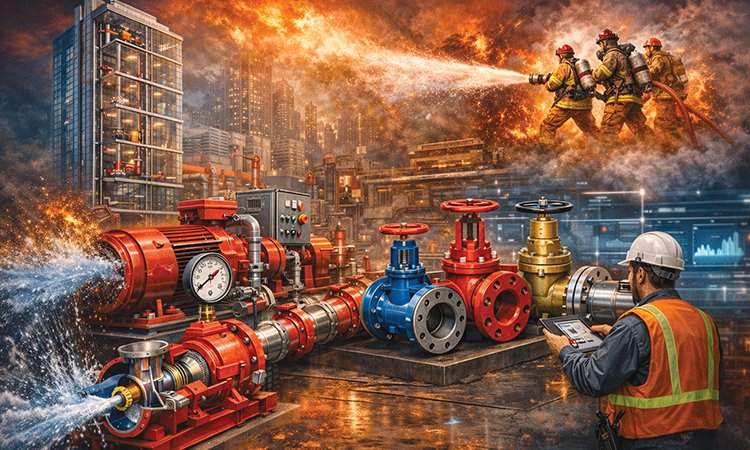
Behind every reliable firefighting system lies a carefully engineered network of pumps and valves designed to deliver water swiftly, safely, and consistently when emergencies strike.
The Backbone of Fire Protection Systems
In any firefighting infrastructure, the most visible elements are fire extinguishers, hydrants, and sprinklers. However, the true backbone of these systems lies deeper within the network—fire pumps and valves. These critical components ensure that water or firefighting agents are delivered at the right pressure, in the right quantity, and at the right moment to suppress fires effectively. Fire pumps and valves are not merely mechanical components; they are precision-engineered devices designed to perform reliably under extreme conditions. Their design must comply with stringent standards and incorporate robust features that guarantee immediate operation during emergencies.
With growing industrialization, high-rise construction, and large-scale infrastructure projects, the design and performance expectations of fire pumps and valves have evolved significantly.
The Critical Role of Fire Pumps
Fire pumps serve as the driving force behind firefighting systems. Their primary role is to maintain the required water pressure and flow rate within the fire protection network. When a fire occurs and sprinklers or hydrants are activated, the pump ensures that water reaches the fire zone quickly and with adequate force.
In many buildings and industrial facilities, municipal water pressure alone is insufficient to meet firefighting demands. Fire pumps compensate for this limitation by boosting pressure and ensuring uninterrupted water supply.
Typically powered by electric motors or diesel engines, fire pumps are designed for reliability and rapid activation. In modern installations, they are integrated with automatic controllers that start the pump instantly when a drop in system pressure is detected.
Types of Fire Pumps and Their Design Considerations
Several types of fire pumps are used depending on the application, building design, and water supply requirements.
Centrifugal Pumps:
Centrifugal pumps are the most commonly used fire pumps due to their simplicity and efficiency. They operate by converting rotational energy from the motor into fluid energy through an impeller. These pumps are ideal for applications requiring high flow rates and stable pressure.
Horizontal Split Case Pumps:
These pumps are widely used in large industrial facilities and commercial buildings. Their design allows easy maintenance since the pump casing can be opened without disturbing the piping system.
Vertical Turbine Pumps:
Vertical turbine pumps are typically used when the water source is located below ground level, such as in wells or reservoirs. Their vertical design allows them to draw water efficiently from deep sources.
End-Suction Pumps:
End-suction pumps are compact and economical, making them suitable for smaller buildings or supplementary fire protection systems. Each type is engineered to meet specific operational requirements, and the selection depends on factors such as building height, hazard classification, and water supply conditions.
Engineering Design Parameters for Fire Pumps
Designing a fire pump involves several critical engineering considerations to ensure performance reliability.
Flow Rate and Pressure:
The pump must deliver water at a predetermined flow rate and pressure based on the fire hazard classification of the building or facility.
Material Selection:
Components such as impellers, casings, and shafts must be made from corrosion-resistant materials to ensure longevity, particularly in environments where water quality may vary.
Redundancy and Reliability:
Fire pump systems often include standby pumps or dual power sources to ensure operation even during power failures.
Automatic Control Systems:
Modern fire pumps incorporate intelligent controllers that monitor pressure levels and activate the pump automatically when required.
Compliance with Standards:
Design and manufacturing must comply with international standards such as NFPA, UL, FM, and national regulations to guarantee safety and performance. These design parameters ensure that the pump performs flawlessly when called upon during emergencies.
The Vital Role of Valves in Fire Protection
While fire pumps provide the pressure and flow required for firefighting, valves control and regulate the movement of water throughout the system. They act as gatekeepers that direct, isolate, and manage water flow within fire protection networks.
Valves perform several critical functions in fire protection systems:
• Controlling water supply to hydrants and sprinklers
• Preventing backflow in pipelines
• Isolating sections of the system for maintenance
• Regulating pressure within pipelines
Without properly designed valves, even the most powerful pump would be ineffective in delivering water where it is needed.
Types of Fire Protection Valves
Various types of valves are used in firefighting systems, each designed for specific operational purposes.
Gate Valves:
Gate valves are widely used to isolate sections of the fire protection system. Their design allows unobstructed water flow when fully open, minimizing pressure loss.
Butterfly Valves:
Butterfly valves are compact and easy to operate, making them ideal for large pipelines. Their quarter-turn operation enables quick opening and closing.
Check Valves:
Check valves prevent reverse flow in pipelines, ensuring that water moves only in the intended direction.
Pressure Relief Valves:
These valves protect the system from excessive pressure that could damage pipelines or equipment.
Deluge Valves:
Deluge valves are used in high-risk environments such as chemical plants and aircraft hangars. They release large quantities of water instantly when triggered by fire detection systems. Each valve type is designed to meet specific operational requirements within the firefighting network.
Key Design Aspects of Fire Protection Valves
The design of fire protection valves must ensure reliability, durability, and ease of operation.
High Durability:
Valves must withstand high water pressure and harsh environmental conditions without leakage or failure.
 Corrosion Resistance:
Materials such as ductile iron, bronze, and stainless steel are commonly used to resist corrosion and extend service life.
Low Pressure Loss:
Efficient valve design minimizes friction losses within pipelines, ensuring maximum water delivery during firefighting operations.
Tamper-Proof Design:
In many systems, valves are equipped with tamper switches that alert control systems if the valve position is altered.
Ease of Maintenance:
Valves must be designed for easy inspection and servicing to maintain system readiness. These design considerations ensure that valves operate reliably throughout the lifespan of the fire protection system.
Integration with Modern Fire Safety Systems
Modern fire pumps and valves are increasingly integrated into intelligent fire protection networks. Digital monitoring systems can track pump performance, valve positions, and pipeline pressure in real time. Sensors embedded in these components transmit data to centralized control systems, enabling predictive maintenance and faster fault detection. If a valve is closed accidentally or a pump experiences abnormal vibration, the system can alert operators immediately. This integration improves system reliability and reduces downtime, ensuring that fire protection infrastructure remains fully operational.
Challenges in Designing Fire Pumps and Valves
Despite advancements, several challenges remain in designing fire pumps and valves.
• Ensuring consistent performance in extreme environments
• Managing corrosion and scaling in water pipelines
• Designing compact systems for space-constrained urban buildings
• Meeting evolving international safety standards
Manufacturers must continuously innovate to overcome these challenges while maintaining cost efficiency and operational reliability.
Future Trends in Fire Pump and Valve Technology
The future of fire protection equipment will likely see further innovation in pump and valve design. Energy-efficient pumps, corrosion-resistant materials, and smart valve systems equipped with digital monitoring capabilities are expected to become more common. Additive manufacturing and advanced materials may also influence the design of next-generation components. Automation and remote monitoring will play an increasingly important role in ensuring that fire protection systems operate efficiently and reliably.
Conclusion
Fire pumps and valves form the heart of any firefighting infrastructure. Their design, engineering precision, and operational reliability determine how effectively water or suppression agents reach the fire zone during emergencies. As buildings grow taller, industries become more complex, and safety regulations become more stringent, the importance of well-designed fire pumps and valves will only increase. Through continuous innovation in design, materials, and digital integration, these critical components will continue to safeguard lives, infrastructure, and industrial assets. In the realm of fire protection, pumps provide the power, valves provide the control, and together they form the lifeline that keeps fire safety systems ready to respond when every second counts.