
Revolutionary Trends in Cameras for Fire and Smoke Detection – Redefining Early Warning Systems

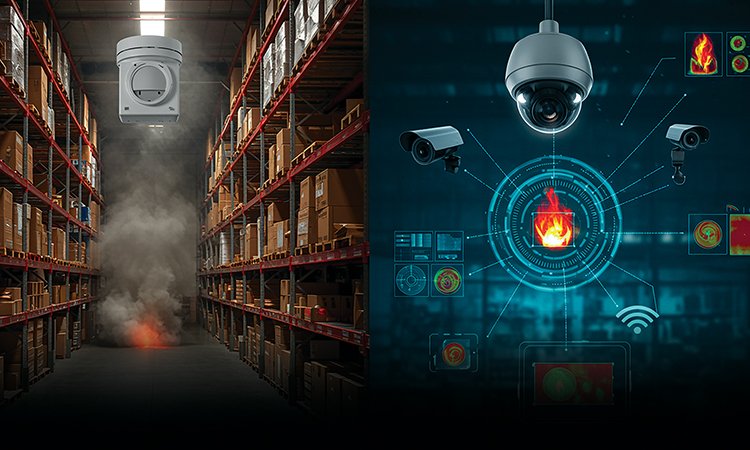
Fire safety has always been a critical concern across industries, infrastructure, and public spaces. Traditionally, fire detection systems relied heavily on smoke detectors, heat sensors, and manual alarms. While these systems have served their purpose, they often come with limitations such as delayed response, false alarms, and restricted coverage. Today, with the advent of advanced imaging technologies and intelligent analytics, camera-based fire and smoke detection systems are revolutionizing the way we approach fire safety. These systems are faster, smarter, and far more reliable—ushering in a new era of proactive fire prevention.
From Conventional Sensors to Vision-Based Detection
Traditional fire detection systems operate on point-based sensing—detecting smoke particles or temperature rise at a specific location. While effective in enclosed environments, these systems struggle in large, open, or high-ceiling spaces such as warehouses, manufacturing plants, airports, and tunnels.
Camera-based detection systems overcome these limitations by providing wide-area coverage. Instead of waiting for smoke to reach a sensor, they visually detect fire and smoke at the source. This significantly reduces detection time, enabling quicker response and minimizing damage. The shift from point detection to area surveillance marks a fundamental change in fire safety strategy.
AI-Powered Fire and Smoke Recognition
At the core of modern camera-based systems is Artificial Intelligence (AI). Advanced algorithms are trained to recognize the visual signatures of fire and smoke, including color, motion patterns, flickering behavior, and density. AI enables cameras to differentiate between actual fire hazards and non-threatening visual disturbances such as dust, fog, steam, or lighting variations. This dramatically reduces false alarms-a common challenge in traditional systems. Machine learning models continue to improve over time, enhancing detection accuracy and adaptability across different environments.
Real-Time Detection and Instant Alerts
One of the most significant advantages of camera-based fire detection is real-time monitoring and alerting. These systems continuously analyze video feeds and can trigger alerts within seconds of detecting a potential fire. Alerts can be sent to control rooms, mobile devices, and emergency response systems, enabling immediate action. In critical environments such as oil & gas facilities, power plants, and data centers, this rapid response capability can prevent catastrophic incidents.
Early Smoke Detection in Challenging Environments
Detecting smoke at an early stage is crucial for preventing fire escalation. Camera-based systems excel in identifying even faint smoke patterns, especially in large or ventilated spaces where traditional detectors may fail. Advanced video analytics can detect subtle changes in the environment, such as the gradual spread of smoke, long before it becomes visible to the human eye. This is particularly valuable in industries like warehousing, where stored materials can smolder before igniting into flames.
Thermal Imaging Cameras: Seeing Beyond the Visible
Thermal imaging technology is a game-changer in fire detection. Unlike conventional cameras, thermal cameras detect heat signatures rather than visible light. This allows them to identify hotspots, overheating equipment, and potential fire risks even in complete darkness or through smoke. Thermal cameras are widely used in industrial settings, electrical installations, and perimeter security applications. By detecting temperature anomalies early, these systems enable preventive maintenance and reduce the likelihood of fire incidents.
Multi-Sensor Fusion: Enhancing Accuracy
Modern fire detection systems are increasingly adopting a multi-sensor approach, combining visual cameras, thermal imaging, and traditional sensors. This fusion of technologies enhances reliability and accuracy. For example, a system may use a thermal camera to detect heat buildup and a visual camera to confirm the presence of smoke or flames. Such integrated systems minimize false alarms and provide comprehensive situational awareness.
Edge Computing for Faster Response
Edge computing is playing a pivotal role in improving the performance of camera-based fire detection systems. By processing data locally within the camera or nearby devices, edge computing reduces latency and ensures faster decision-making. This is particularly important in high-risk environments where even a few seconds can make a significant difference. Edge-enabled systems can trigger alarms, activate suppression systems, and initiate emergency protocols instantly, without relying on centralized servers.
Integration with Fire Safety and Building Management Systems
Camera-based fire detection systems are no longer standalone solutions. They are increasingly integrated with broader fire safety and building management systems. Upon detecting a fire, these systems can automatically activate sprinklers, shut down ventilation systems, unlock emergency exits, and alert emergency services. Integration with Building Management Systems (BMS) ensures a coordinated and efficient response, reducing the impact of fire incidents.
Cloud Connectivity and Remote Monitoring
Cloud-based platforms are enabling remote monitoring and management of fire detection systems. Facility managers and safety personnel can access live video feeds, receive alerts, and analyze data from anywhere. Cloud connectivity also facilitates data storage, analytics, and system updates. Historical data can be used to identify patterns, assess risks, and improve fire safety strategies. This is particularly beneficial for organizations with multiple locations.
Applications Across Industries
The adoption of camera-based fire and smoke detection systems is expanding across various sectors:
• Manufacturing and Warehousing: Early detection of fires in large storage areas and production facilities.
• Oil & Gas and Power Plants: Monitoring of high-risk zones with potential for explosive fires.
• Transportation Infrastructure: Fire detection in tunnels, airports, and railway stations.
• Commercial Buildings: Enhanced safety in malls, offices, and high-rise structures.
• Forestry and Environmental Monitoring: Detection of wildfires in remote areas.
In India, the growing emphasis on industrial safety, smart cities, and infrastructure development is driving the adoption of these advanced systems.

Reducing False Alarms: A Critical Advantage
False alarms are a major concern in fire detection systems, leading to unnecessary disruptions and reduced trust in the system. Camera-based solutions, powered by AI, significantly reduce false positives by accurately distinguishing between real threats and harmless conditions. This not only improves operational efficiency but also ensures that emergency responses are triggered only when genuinely required.
Challenges and Considerations
Despite their advantages, camera-based fire detection systems come with certain challenges. Factors such as high initial investment, environmental conditions (dust, lighting, weather), and the need for proper calibration can impact performance. Additionally, integrating these systems with existing infrastructure requires careful planning. Training personnel to effectively use and manage these systems is also essential.
The Role of Sustainability and Energy Efficiency
Modern camera systems are being designed with energy efficiency in mind. Low-power cameras and solar-powered solutions are gaining popularity, especially in remote or large-scale installations. Sustainable fire detection solutions align with broader environmental goals while ensuring safety and reliability.
The Future: Intelligent and Autonomous Fire Safety
The future of fire and smoke detection lies in fully autonomous systems powered by advanced AI and deep learning. These systems will not only detect fires but also predict potential risks based on environmental conditions and historical data. Innovations such as drone-based fire detection, satellite imaging for wildfire monitoring, and integration with smart city platforms are set to further enhance capabilities. The convergence of technologies will create a comprehensive fire safety ecosystem that is intelligent, responsive, and resilient.
Conclusion: A Paradigm Shift in Fire Safety
Camera-based fire and smoke detection systems represent a significant leap forward in fire safety technology. By combining visual intelligence, thermal imaging, and real-time analytics, these systems offer faster detection, greater accuracy, and broader coverage than traditional methods. As industries and urban environments become more complex, the need for advanced fire detection solutions will continue to grow. Embracing these revolutionary trends is not just about adopting new technology—it is about safeguarding lives, protecting assets, and building a safer future. In this evolving landscape, cameras are no longer just passive observers—they are intelligent guardians, capable of detecting, analyzing, and responding to fire risks with unprecedented speed and precision.