

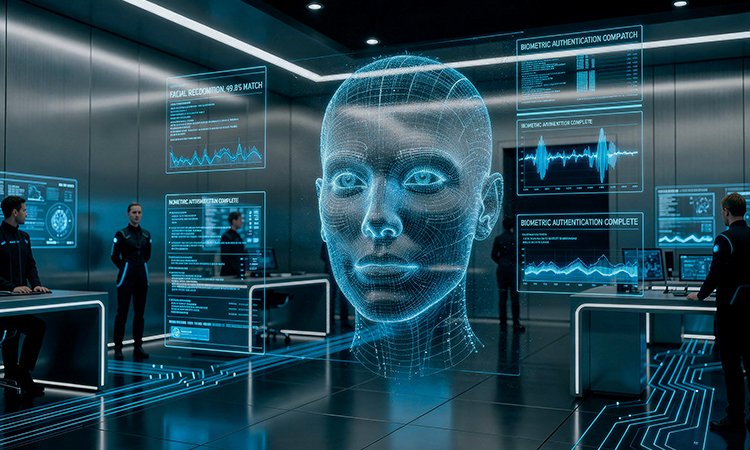
Biometric security has moved far beyond fingerprint scanners and face unlock systems. Today, biometrics is evolving into an intelligent, adaptive and continuous security framework powered by artificial intelligence, behavioral analytics and multimodal authentication. From smartphones and banking applications to airports, factories and smart buildings, biometric technologies are redefining how identities are verified and protected.
The latest developments in biometric security are being driven by two major forces: the demand for frictionless user experiences and the growing sophistication of cyber threats. As hackers increasingly deploy deep fakes, synthetic identities and AI-powered spoofing tools, conventional passwords and single-factor authentication methods are proving inadequate. Modern biometric systems are therefore becoming smarter, faster and more resilient.
Rise of Multimodal Biometrics
One of the biggest advancements in biometric security is the emergence of multimodal biometric systems. Instead of relying on a single trait such as fingerprint or facial recognition, modern systems combine multiple identifiers including face, iris, voice, palm vein and behavioral patterns. This layered approach significantly improves authentication accuracy while reducing false acceptance and false rejection rates. If one biometric parameter fails due to poor lighting, injury or environmental conditions, another identifier can still validate the user.
Multimodal systems are increasingly being adopted in high-security sectors such as banking, healthcare, defense and border control. Airports, for instance, are integrating facial recognition with passport data and behavioral analytics to accelerate passenger processing while improving security.
Behavioral Biometrics Gain Momentum
Behavioral biometrics is emerging as one of the most promising trends in the security industry. Unlike traditional biometrics that analyze physical characteristics, behavioral biometrics studies how a person interacts with devices and systems. Typing rhythm, swipe speed, mouse movements, touchscreen pressure, gait patterns and device-handling habits are now being used as continuous identity indicators.
The major advantage of behavioral biometrics lies in continuous authentication. Instead of verifying a user only during login, systems can continuously monitor user behavior in the background throughout a session. If unusual behavior is detected, the system can instantly trigger alerts, request re-authentication or block suspicious activity.
Financial institutions are increasingly using behavioral biometrics to detect account takeover attempts and online fraud. Even if a cybercriminal steals passwords or OTPs, abnormal typing patterns or navigation behavior can reveal unauthorized access.
AI and Machine Learning Strengthen Biometrics
Artificial intelligence and machine learning are playing a transformative role in modern biometric systems. AI-powered algorithms can process enormous volumes of biometric data with greater speed and precision than conventional systems.
Modern AI-enhanced biometric systems can recognize faces under varying lighting conditions, identify voices amid background noise and adapt to natural changes in appearance caused by aging, facial hair or medical conditions. Machine learning also enables adaptive authentication. The system continuously learns user behavior and updates authentication models dynamically. This improves both convenience and security over time.
Another important advancement is AI-driven fraud detection. Sophisticated systems can now identify fake fingerprints, synthetic voices and deep fake videos with increasing accuracy. Liveness detection technologies have become especially important in combating spoofing attacks.
Liveness Detection Becomes Critical
As deep fake technologies become more accessible, liveness detection has become a vital component of biometric security. Traditional facial recognition systems can sometimes be fooled by photographs, recorded videos or AI-generated replicas.
Modern liveness detection systems verify whether the biometric sample originates from a real, live person. These systems analyze blinking patterns, skin texture, blood flow, depth perception, pupil movement and micro-expressions to distinguish genuine users from fake representations. Banks, fintech firms and government agencies are investing heavily in anti-spoofing technologies to strengthen digital onboarding and remote identity verification.
Contactless Biometrics on the Rise
The pandemic accelerated the adoption of contactless biometric technologies. Organizations increasingly prefer touch-free authentication systems that improve hygiene, convenience and speed. Facial recognition, iris scanning, voice authentication and palm vein recognition are rapidly replacing touch-based fingerprint systems in many applications. Contactless biometrics are finding widespread use in smart offices, healthcare facilities, transportation hubs and industrial workplaces. Employees can enter facilities or access restricted areas without touching shared surfaces. In manufacturing environments, contactless systems also support faster workforce movement while maintaining strict access control protocols.
 Mobile Biometrics Redefining Access Control
Smartphones are becoming central hubs for biometric authentication. Modern mobile devices already integrate facial recognition, fingerprint authentication and voice verification capabilities. Enterprises are now leveraging mobile biometrics for physical access control, digital identity verification and secure payments. Instead of carrying access cards or remembering passwords, users can authenticate themselves using their mobile devices. Cloud-connected biometric systems also simplify credential management for organizations. This trend is particularly significant in smart buildings and Industry 4.0 environments, where seamless access control is becoming essential.
Edge Computing Improves Privacy
Privacy concerns remain one of the biggest challenges in biometric security. Since biometric identifiers are permanent and unique, any data breach involving biometric information can have serious consequences. To address this concern, companies are increasingly adopting edge computing models. Instead of transmitting biometric data to centralized cloud servers, authentication processing takes place locally on devices. Modern smartphones, for example, store biometric templates in secure hardware enclaves rather than on external servers. This minimizes exposure to cyberattacks and strengthens user privacy. New approaches such as zero-knowledge biometrics are also gaining traction. These systems verify identities without actually storing retrievable biometric data.
Biometrics and Zero Trust Security
Biometric security is increasingly being integrated into Zero Trust security architectures. Zero Trust operates on the principle of “never trust, always verify,” requiring continuous authentication and monitoring. Behavioral biometrics, AI-driven analytics and adaptive authentication fit naturally into this model. Instead of granting blanket access after login, systems continuously evaluate user identity, device behavior, location and risk context. This approach is becoming particularly important in remote working environments, cloud computing ecosystems and critical infrastructure sectors.
 Emerging Technologies Expanding the Horizon
Researchers are exploring unconventional biometric technologies that could redefine identity verification in the future. One experimental area involves identifying individuals through Wi-Fi signal disturbances caused by body movement and presence. Other emerging technologies include heartbeat recognition, brainwave authentication and DNA-based identification systems. Though still in developmental stages, these innovations indicate the expanding scope of biometric science. Researchers are also integrating biometric analytics into automotive safety, smart homes, healthcare monitoring and online learning environments.
Challenges and Ethical Concerns
Despite rapid advancements, biometric security still faces significant challenges. Privacy concerns, surveillance fears, algorithmic bias and legal issues continue to generate debate worldwide. Critics argue that widespread facial recognition deployment could enable mass surveillance and misuse of personal data. Deep fake threats also raise questions about the long-term reliability of biometric systems. Governments and regulatory bodies are therefore introducing stricter compliance frameworks for biometric data handling, consent management and ethical AI deployment. The industry is responding by investing in privacy-preserving technologies, bias mitigation techniques and transparent governance models.
The Road Ahead
Biometric security is entering a new era where authentication is becoming intelligent, invisible and continuous. The future lies not in standalone fingerprint scanners or face unlock systems, but in integrated identity ecosystems combining AI, behavioral analytics, multimodal biometrics and adaptive security frameworks. As digital transformation accelerates across industries, biometrics will play a central role in securing financial transactions, industrial operations, government services and personal devices. The challenge for the industry will be balancing convenience, privacy and ethical responsibility while staying ahead of increasingly sophisticated cyber threats. What is clear, however, is that biometric security is no longer just an optional layer of protection – it is becoming the foundation of next-generation digital identity and trust.