
High Performance Silicone Sleeves for Reliable Corona Discharge Systems : Engineering Performance beyond Insulation

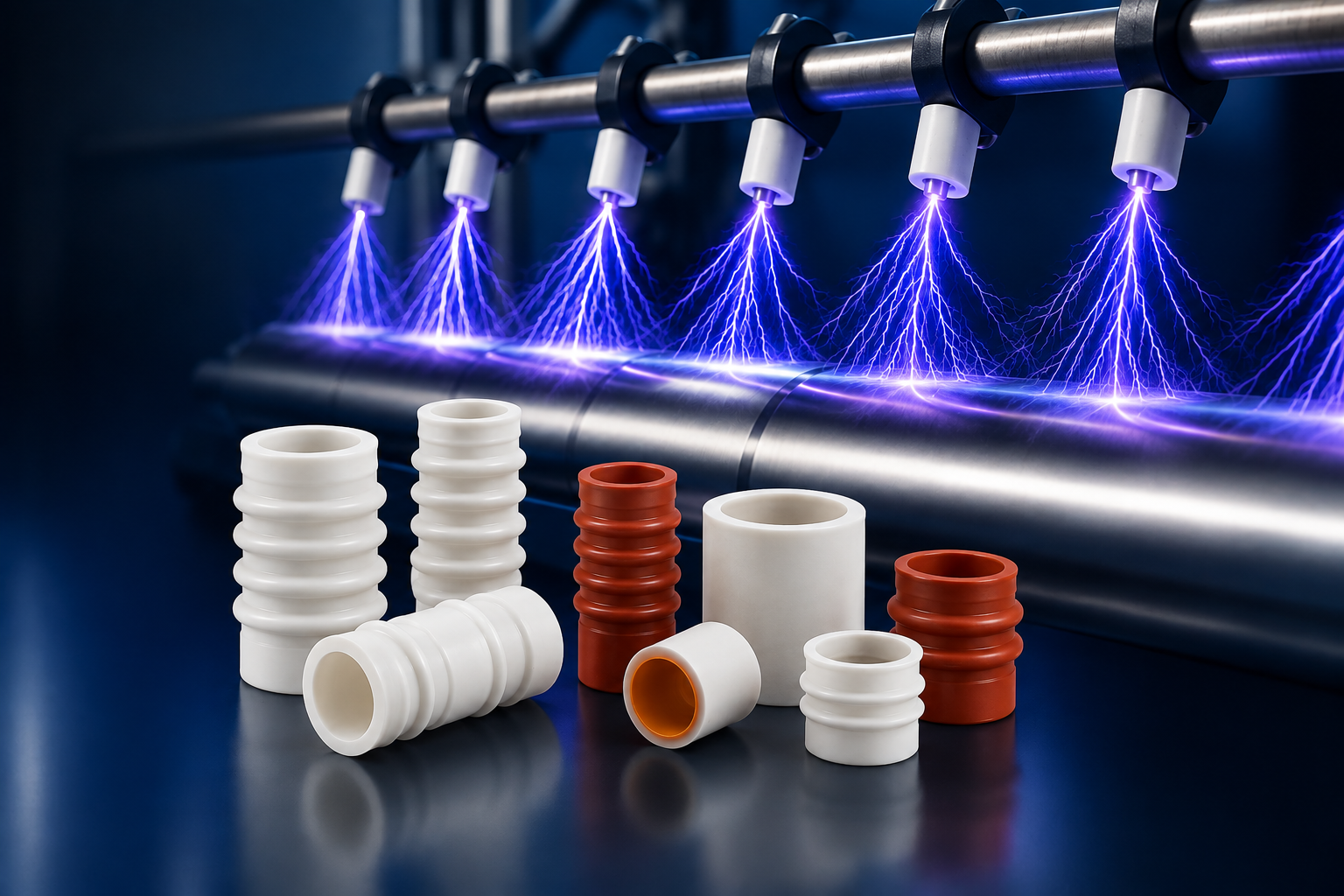
In today’s converting and packaging industries, product quality is measured not only by the strength of the substrate but also by the quality of its surface. Whether it is flexible packaging, pharmaceutical blister films, labels, battery separators, or specialty laminates, excellent printability and strong adhesive bonding have become indispensable manufacturing requirements. Achieving these consistently relies on an efficient corona discharge system.
While much attention is often given to high voltage generators and electrode design, one of the most critical components of a corona treater is frequently overlooked – the silicone dielectric sleeve. More than just a protective covering, the sleeve directly influences treatment uniformity, electrical efficiency, equipment reliability, and operational safety. As production lines continue to run at higher speeds with tighter quality tolerances, the role of precision engineered silicone sleeves has evolved from a consumable component to a performance-critical engineering solution.
The Science behind Corona Treatment
Corona treatment is controlled electrical discharge process that modifies the surface characteristics of low surface energy materials. When high alternating voltage is applied between an electrode and a grounded roller, the surrounding air becomes ionized, producing plasma. This plasma introduces polar functional groups onto the material surface, increasing its surface energy and significantly improving wettability.
The process enables superior adhesion of:
• Printing inks
• Solvent and water based coatings
• Pressure sensitive adhesives
• Laminating adhesives
• Functional coatings
Materials commonly treated include polyethylene (PE), polypropylene (PP), polyester (PET), BOPP films, PVC, paper, aluminium foils, non-woven fabrics, and numerous engineered polymer films. For this plasma generation to remain stable and uniform, the dielectric barrier must possess exceptional electrical and mechanical integrity. This is where high performance silicone sleeves become indispensable.
Why Silicone Remains the Material of Choice
Silicone elastomers offer a unique combination of properties that few engineering materials can match. Their excellent dielectric strength enables them to withstand the high voltages generated during corona treatment without electrical breakdown. This ensures efficient plasma generation while protecting equipment from unwanted arcing.
Equally important is silicone’s remarkable thermal stability. Corona treaters operate continuously uner elevated temperatures, especially in high speed production environments. Premium silicone compounds maintain their mechanical and electrical properties across a wide operating temperature range, ensuring dimensional stability throughout extended production cycles.
Another defining advantage is outstanding resistance to ozone. Since ozone is continuously generated during corona discharge, conventional elastomers often suffer surface cracking and premature ageing. Silicone’s inorganic silicone – oxygen backbone provides exceptional resistance to ozone attack, resulting in longer operational life and reduced maintenance. Silicone also demonstrates excellent resistance to ultraviolet radiation, weathering, and environmental ageing, making it suitable for demanding industrial environments where long term reliability is essential.
Precision Engineering Matters
Not all silicone sleeves deliver the same performance. The consistency of corona treatment depends heavily on the quality of the sleeve’s manufacture. Even minor variations in wall thickness or concentricity can alter the electric field distribution, leading to uneven treatment, inconsistent dyne levels, and poor print adhesion. Manufacturing excellence therefore extends far beyond material selection.
Critical engineering parameters include:
• Tight dimensional thickness
• Uniform wall thickness
• Bubble-free construction
• Controlled curing processes
• Optimizes hardness
• High tear strength
• Excellent surface finish
• Stable dielectric characteristics
Advanced manufacturing techniques help eliminate internal voids and defects that could otherwise become initiation points for electrical failure under high voltage operation.
Supporting High-Speed Manufacturing
Modern converting lines routinely operate at significantly higher speeds that they did a decade ago. These demanding operating conditions place greater stress on every component within the corona treatment system.
High performance silicone sleeves contribute to production efficiency by providing:
• dielectric performance throughout continuous operation
• Uniform treatment across the entire web width
• Reduced electrical losses
• Lower risk of dielectric failure
• Extended service intervals
• Improved process repeatability
For manufacturer operating with round the clock production facilities, these advantages translate into higher Overall Equipment Effectiveness (OEE), lower maintenance costs, and fewer unplanned shutdowns.
Applications across Multiple Industries
The importance of reliable corona treatment extends well beyond conventional packaging. Today, precision silicone sleeves support manufacturing operations across numerous sectors, including:
• Flexible Packaging – Surface activation for superior ink adhesion and laminate bonding
• Pharmaceutical Packaging – High quality treatment for blister films, medical pouches, and sterile packaging materials.
• Food & Beverage Packaging – Consistent surface modification for hygienic packaging applications requiring reliable print quality.
• Industrial Laminates – Improved adhesion of functional coatings and specialty films.
• Wire & Cable Manufacturing – Enhanced bonding of insulation layers and protective coatings.
• Textile & Nonwovens – Better dye acceptance, coating adhesion, and functional finishing.
As new advanced materials continue to emerge, reliable corona treatment remains essential for achieving consistent manufacturing quality.
Extending Equipment Life through Better Materials
A high quality silicone sleeve contributes not only to better treatment performance but also to the protection of the entire corona treater. Stable dielectric properties reduce electrical stress on electrodes and generators, while dimensional consistency minimizes uneven loading on rollers. The result is longer equipment life and reduced maintenance requirements throughout the production system. Preventive maintenance practices – including routine cleaning, inspection for surface damage, proper storage, and timely replacement – further maximize service life and maintain consistent process performance.
Engineering Solutions, Not Just Components
Selecting a silicone sleeve should never be viewed as simply replacing a worn consumable. Every production line has unique operating conditions, including voltage levels, substrate types, web speeds, roller dimensions, environmental conditions, and treatment requirements.
Consequently, sleeve design should be approached as an engineering decision rather than a catalogue purchase. At Ami Polymer, this philosophy drives product development. Drawing upon decades of expertise in silicone elastomer processing and precision manufacturing, the company designs and manufactures silicone sleeves engineered to deliver consistent dielectric performance, excellent dimensional accuracy, and long term durability under demanding industrial conditions.
By combining material science with application engineering, Ami Polymer works closely with OEMs, machine builders, and end users to provide solutions tailored to specific operating environments rather than offering one-size-fits-all products. This collaborative approach helps customers improve process reliability, reduce downtime, and maintain consistent product quality across high speed manufacturing operations.
Looking Ahead
The future of corona treatment is closely linked with advances in materials engineering. Higher production speeds, smarter manufacturing systems, and increasingly demanding quality standards require dielectric components that offer greater precision, longer service life, and predictable performance. Innovations in platinum-cured silicone compounds, tighter manufacturing tolerances, advanced quality inspection methods, and application specific formulations are expected to further enhance corona treater efficiency while supporting Industry 4.0 initiatives through improved process stability and predictive maintenance.
Conclusion
Reliable corona discharge begins with reliable insulation. High performance silicone sleeves play a far greater role than simply separating electrodes from grounded rollers – they are fundamental to treatment consistency, equipment protection, operational safety, and manufacturing efficiency.
As industries continue to demand superior product quality and higher productivity, investing in precision engineered silicone sleeves becomes a strategic decision that delivers measurable operational benefits. By combining advanced silicone technology with engineering expertise, manufacturer can achieve greater process reliability, longer equipment life, and consistent surface treatment across a broad range of industrial applications.
For companies seeking dependable performance rather than just replacement parts, engineered silicone sleeve solutions provide the foundation for reliable corona discharge systems today and for the manufacturing challenges of tomorrow.