


Redefining Security Through Intelligence, Connectivity and Seamless User Experience
Access control systems have evolved dramatically from the days of mechanical locks, metal keys and standalone card readers. Today, they are intelligent, connected and data-driven ecosystems that not only regulate entry and exit but also contribute significantly to organizational security, operational efficiency and user convenience.
Across industries such as manufacturing, IT, healthcare, transportation, banking, education and critical infrastructure, modern access control technologies are reshaping how facilities protect assets, people and information.
The rapid growth of smart buildings, Industry 4.0, cloud computing and artificial intelligence has accelerated innovations in access control systems. Enterprises now demand solutions that are scalable, cyber-secure, touchless, remotely manageable and capable of integrating seamlessly with other security and building management platforms. In an era where physical and digital security are increasingly intertwined, access control has become a strategic component of enterprise resilience.
From Conventional Systems to Intelligent Platforms
Traditional access control systems largely depended on physical credentials such as keys, magnetic stripe cards or basic proximity cards. While these systems offered a degree of security, they also had limitations related to duplication, credential loss, maintenance and restricted monitoring capabilities.
Modern systems, by contrast, are software-centric and highly intelligent. They combine biometric authentication, cloud computing, mobile credentials, AI-powered analytics and IoT connectivity to create dynamic security environments. These solutions not only determine who can enter a facility but also analyze patterns, detect anomalies and generate actionable insights. The transformation is especially visible in large industrial plants and corporate campuses where centralized management platforms can monitor multiple facilities in real time. Administrators can instantly grant or revoke access privileges, monitor movement patterns and receive alerts for unauthorized activities from virtually anywhere.
Rise of Touchless and Biometric Technologies
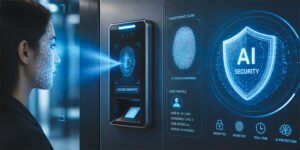
One of the most significant innovations in recent years has been the widespread adoption of touchless and biometric access control systems. The demand for hygienic and frictionless access solutions increased substantially following the global pandemic, pushing organizations toward contactless technologies. Facial recognition systems today are faster, more accurate and capable of functioning effectively even under varying lighting conditions or when users wear masks or safety gear. Advanced algorithms powered by artificial intelligence enable real-time identification with remarkable precision while minimizing false acceptance or rejection rates.
Fingerprint recognition remains widely used due to its affordability and reliability, especially in manufacturing facilities, warehouses and office environments. However, newer biometric modalities such as iris recognition, palm-vein authentication and behavioral biometrics are gaining traction in high-security sectors including defense, research laboratories and financial institutions. Multimodal biometric systems, which combine two or more authentication methods, are emerging as a preferred solution for critical applications. For instance, a system may combine facial recognition with mobile credentials or fingerprint authentication to achieve higher security levels.
Mobile Credentials and Smartphone-Based Access
The smartphone has rapidly become a central tool in access management. Mobile-based access control systems are replacing traditional cards and badges in many organizations. Employees can now use smartphones, smartwatches or digital wallets as secure credentials for accessing offices, production units, parking areas and restricted zones. Near-field communication (NFC) and Bluetooth Low Energy (BLE) technologies are enabling seamless access experiences. Users can unlock doors simply by approaching them, eliminating the need for physical interaction with readers or keypads.
Mobile credentials offer several advantages. They reduce the costs associated with printing and managing physical cards, simplify credential distribution and enhance security through encrypted communication. Lost or stolen credentials can be disabled remotely within seconds, minimizing security risks. Additionally, mobile access systems support remote onboarding, allowing organizations to issue digital credentials instantly to employees, contractors or visitors without requiring physical presence. This feature has become particularly valuable in hybrid working environments and multi-location enterprises.
Cloud-Based Access Control Gains Momentum
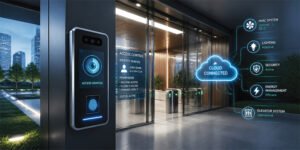
Cloud technology is revolutionizing access control infrastructure by moving management functions away from onsite servers to secure cloud environments. Cloud-based access control systems provide greater flexibility, scalability and cost efficiency compared to traditional systems. Organizations can manage multiple facilities through centralized dashboards accessible from any internet-connected device. System updates, security patches and software enhancements can be implemented automatically, reducing maintenance burdens on IT teams.
Cloud platforms also support real-time monitoring and remote troubleshooting. Security personnel can lock or unlock doors, monitor alarms and review access logs from remote locations. This capability is particularly beneficial for organizations with geographically distributed operations. Another major advantage is scalability. As organizations expand, new doors, facilities and users can be added without extensive hardware investments. Small and medium enterprises, which previously found advanced access control systems financially challenging, are now adopting cloud-based solutions due to their subscription-based models and lower upfront costs.
Artificial Intelligence Enhances Security Intelligence
Artificial intelligence is adding a new layer of intelligence to access control systems. AI-powered analytics can study user behavior, detect unusual access patterns and identify potential security threats before they escalate. For example, if an employee attempts to access a restricted area at an unusual hour or from an unexpected location, the system can automatically generate alerts or trigger additional authentication requirements. Machine learning algorithms continuously improve accuracy by analyzing historical data and adapting to evolving patterns.
AI also enhances video-integrated access control systems. When combined with surveillance cameras, access systems can correlate entry records with video footage to verify identities and investigate incidents more efficiently. Predictive analytics is another emerging capability. By analyzing occupancy trends, visitor movement and facility utilization patterns, organizations can optimize resource allocation, improve energy management and enhance operational planning.
Integration with Smart Building Ecosystems
Modern access control systems are increasingly integrated with broader smart building technologies. Instead of functioning as isolated security tools, they now interact with surveillance systems, fire alarms, HVAC systems, lighting controls and visitor management platforms. When an employee enters a facility, the integrated system can automatically adjust lighting, temperature and workstation settings based on personalized preferences. In emergency situations, access systems can coordinate with fire safety systems to unlock exit routes and guide occupants toward safe evacuation paths.
Industrial facilities are also leveraging integrated access control systems to improve safety compliance. Access permissions can be linked to employee certifications, training status or personal protective equipment requirements. Workers who lack valid certifications may be automatically denied entry to hazardous zones. Such integration enhances not only security but also operational efficiency, energy conservation and occupant comfort.
Visitor Management Becomes Smarter
Innovations in visitor management are transforming how organizations handle guests, vendors and contractors. Traditional paper-based visitor registers are being replaced by digital platforms that offer pre-registration, identity verification and automated notifications. Visitors can receive QR-code-based credentials on their smartphones before arrival. Self-service kiosks equipped with facial recognition or ID scanning capabilities further streamline check-in procedures.
Advanced systems can also conduct background verification, monitor visitor movement within facilities and maintain detailed digital records for compliance purposes. Integration with access control platforms ensures that visitors can access only authorized areas during specified time windows. In manufacturing plants, where contractor access is common, digital visitor management systems help improve accountability and workplace safety.
 Cybersecurity Takes Center Stage
As access control systems become increasingly connected and software-driven, cybersecurity has emerged as a critical concern. A compromised access control network can expose sensitive facilities and critical infrastructure to serious threats. Manufacturers are therefore investing heavily in cybersecurity features such as end-to-end encryption, multi-factor authentication, secure firmware updates and zero-trust architectures. Modern systems are designed to comply with stringent cybersecurity standards and data privacy regulations.
Network segmentation and continuous monitoring are becoming essential practices for safeguarding access control infrastructure. AI-driven threat detection systems can identify suspicious cyber activities and initiate preventive measures automatically. Organizations are also paying greater attention to protecting biometric data, ensuring that personal information is securely stored and processed in compliance with privacy regulations.
Role of Access Control in Industrial Safety
In industrial environments, access control systems are playing a growing role beyond conventional security. Manufacturing plants, oil & gas facilities, power stations and chemical industries are using advanced access solutions to strengthen operational safety. Access permissions can be linked to worker competencies, medical fitness and safety training records. Only authorized and qualified personnel are allowed into hazardous or sensitive areas. In emergencies, real-time occupancy tracking helps rescue teams identify personnel inside affected zones.
Integration with wearable devices and IoT sensors is further enhancing worker safety. Smart helmets, badges and wearable trackers can communicate with access systems to monitor worker location, fatigue levels or exposure to hazardous conditions. Such innovations are helping industries build safer workplaces while ensuring regulatory compliance.
Emergence of AI-Powered Identity Management
Identity management is becoming more dynamic and adaptive with AI-driven technologies. Continuous authentication systems can verify user identity throughout the duration of access rather than only at entry points. Behavioral biometrics, including gait recognition, typing patterns and movement analysis, are emerging as additional layers of security. These technologies can detect impersonation attempts or unauthorized activities with greater sophistication.
Decentralized identity systems based on blockchain technology are also gaining attention. These systems allow users to control their own digital identities while reducing reliance on centralized databases vulnerable to cyberattacks. Though still evolving, such innovations may significantly influence the future of access control and digital identity verification.
Sustainability and Energy Efficiency
Sustainability is becoming an important consideration in access control system design. Modern solutions are incorporating energy-efficient hardware, low-power communication protocols and cloud architectures that reduce onsite infrastructure requirements. Smart occupancy-based access systems can optimize lighting and HVAC operations based on real-time usage patterns, contributing to reduced energy consumption in commercial buildings.
Wireless access control devices are also reducing cabling requirements and simplifying installation in retrofitting projects. Solar-powered access solutions are being explored for remote locations and infrastructure projects. As organizations pursue sustainability goals, intelligent access control systems are expected to contribute significantly to green building initiatives.
 Future Outlook
The future of access control systems lies in deeper intelligence, stronger interoperability and enhanced user-centric experiences. The convergence of AI, biometrics, cloud computing, IoT and cybersecurity will continue to drive innovation across the sector. Future systems may rely heavily on predictive intelligence, adaptive authentication and autonomous threat response mechanisms. Physical credentials may gradually disappear as biometric and digital identity technologies mature further.
In smart factories and connected enterprises, access control systems will increasingly function as operational intelligence platforms rather than standalone security solutions. Their role will expand beyond regulating entry to enabling safer, smarter and more efficient workplaces. As organizations confront evolving security challenges and rising expectations for convenience and flexibility, innovations in access control systems will remain central to the future of modern infrastructure and enterprise protection.