
Advancing Fire Protection Through Globally Acclaimed Innovation, Reliability & Sustainability


Vice President-Minimax Fire Division,
Gunnebo India
As fire risks grow increasingly complex across industrial and commercial environments, the need for intelligent, reliable and sustainable fire protection solutions has never been greater. Gunnebo’s Minimax Fire Division brings together advanced fire suppression technologies, engineering expertise and a commitment to safety, addressing the evolving needs of industries and infrastructure. In this cover story, we explore Minimax’s innovative solutions, application-driven approach and vision for shaping the future of fire protection through enhanced reliability, sustainability and technological excellence. Industrial Safety Review in conversation with Johnson Mathew, Vice President – Minimax Fire Division, Gunnebo. Excerpts:
Q. Minimax has a long-standing presence in India’s fire protection industry, supported by Gunnebo’s global expertise in security and safety solutions. How would you describe the evolution of Minimax in India, its core strengths, and the role it plays in shaping the country’s fire protection landscape? How does the Division leverage its legacy while responding to emerging customer needs?
Minimax has a very distinctive position in India’s fire protection industry. The brand has been present in India since 1903, giving it more than a century of experience in understanding the country’s fire safety requirements and the evolution of its industrial and built environment.
Over the years, the role of Minimax has evolved from being primarily associated with fire extinguishers to providing a broader portfolio of application-specific fire protection solutions. Today, our offering spans portable and mobile extinguishers, ceiling-mounted solutions, automatic panel and room protection, kitchen hood fire suppression and other specialised fire safety applications.
Our greatest strength is the combination of legacy, manufacturing capability, application knowledge and continuous product development. Being part of Gunnebo gives Minimax access to global processes, engineering expertise and a strong culture of quality and continuous improvement, while our presence in India gives us a close understanding of local applications, regulations and customer requirements.
The nature of fire risk is also changing. Data centres, electrical infrastructure, automation, energy systems, modern commercial buildings and high-value manufacturing environments require protection that is increasingly application-specific. Customers are no longer looking simply for a fire extinguisher; they are looking for a solution that detects a developing fire early, suppresses it effectively and minimises disruption to their operations.
That is where we see the future of Minimax—building on the trust associated with the brand while continuously expanding our ability to provide engineered solutions for evolving fire risks.
Q. Fire incidents continue to pose serious risks to lives, industrial assets, and business continuity. From your experience, what are the most critical gaps in fire prevention and protection across India’s industrial, commercial, and institutional sectors? What measures should organizations prioritize to transition from reactive firefighting to proactive fire risk management?
One of the biggest gaps we see is that fire safety is still sometimes approached as a compliance exercise rather than a continuous risk-management function.
A fire protection system is only as effective as the risk assessment, design, installation, commissioning and maintenance behind it. Organisations need to look beyond the question of whether equipment is present and ask whether the equipment is appropriate for the hazard, correctly positioned, accessible, operational and maintained.
Another important gap is the lack of sufficient attention to early-stage fire risks. Electrical panels, UPS and battery rooms, server rooms, machinery, kitchens, cable routes and other enclosed or unmanned areas can develop a fire before personnel become aware of it. These applications require protection designed specifically around the nature of the hazard.
The transition from reactive firefighting to proactive fire risk management should therefore involve five key elements: risk identification, prevention, early detection, appropriate suppression and regular preparedness.
Organisations should conduct periodic fire risk assessments, ensure that protection systems are designed according to the actual hazard, maintain equipment in accordance with applicable standards, train employees and conduct regular emergency drills. They should also review their fire protection strategy whenever there is a change in process, machinery, occupancy, storage or building configuration.
The objective should not simply be to extinguish a fire once it occurs. The objective should be to prevent ignition where possible, detect a fire at the earliest practical stage, control it rapidly and protect people and business-critical assets from consequential damage.
Q. Minimax offers a comprehensive range of portable, ceiling-mounted, and trolley-mounted fire extinguishers using different extinguishing media, including powder, clean agent, CO2, water, foam, and wet chemical. What innovations and design considerations guide your product development? How do you help customers select the appropriate extinguisher based on fire classification, application, and site-specific risks?
Fire extinguisher selection should never be based simply on capacity or price. The starting point has to be the hazard and the fire classification.
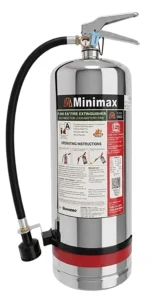
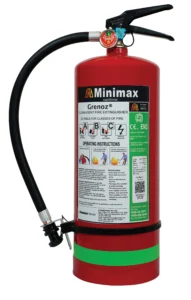
Our product portfolio is therefore designed around different classes of fire and different operating environments. For example, ABC dry powder can address a broad range of ordinary combustible, flammable-liquid and gaseous-fire applications, while CO2 is particularly suited to certain flammable-liquid and electrically energised fire risks. Water and foam have their own specific applications, while wet-chemical extinguishers are designed for cooking-oil and fat fires. For special hazards such as combustible metals, dedicated Class D solutions are required. Clean-agent extinguishers provide another option where minimising residue and collateral damage is particularly important.
Also, India’s rapid shift toward electric mobility, battery storage systems, and EV charging stations has created a growing need for specialized fire protection solutions. Addressing this critical challenge, Minimax has introduced its Lithium-ion Battery Fire Extinguishers using advanced F-500 EA® based on Spherical Micelle Technology, designed specifically for modern lithium-ion battery fire risks.
Design considerations go beyond extinguishing performance. We look at reliability, ergonomics, ease of operation, corrosion resistance, discharge characteristics, agent compatibility, installation environment, maintenance requirements and the overall lifecycle of the product.
For customers, the selection process should begin with a site-specific assessment. We consider the type of fuel, potential ignition sources, electrical exposure, occupancy, environmental conditions, accessibility and the consequences of a fire. The extinguisher’s fire rating and applicable standard are then considered along with its location and required travel distance.
The important principle is simple: the right extinguisher is the one selected for the actual hazard—not simply the most commonly used extinguisher.
Q. Electrical panels, control cabinets, and enclosed equipment present specific fire risks, particularly in industrial environments. Could you elaborate on Minimax’s FIRESPOT® Panel Protection System and automatic room protection solutions? How do these technologies enable early detection and suppression, minimize equipment damage, and support business continuity in unmanned or critical installations?
Electrical panels and enclosed equipment can represent a disproportionate business risk because a relatively small fire can disable a critical part of an operation. Common causes can include loose connections, overloaded circuits, equipment failure, wiring issues and installation-related faults.
FIRESPOT® Panel Protection System has been developed specifically for these enclosed special hazards. It is a self-actuating system that uses a pressurised heat-sensing tube positioned within the protected enclosure. When the tube reaches the activation temperature at the point of fire, it ruptures and releases the clean agent directly at the source of the fire. This allows the system to respond without waiting for manual intervention.
For enclosed or unmanned rooms, FIRESPOT® Room Protection provides an automatic suppression solution. The system combines detection with an automatically actuated clean-agent cylinder and can be used for applications such as electrical rooms, UPS and battery rooms, switchboard rooms, server rooms and record rooms.
The use of a clean agent is particularly relevant in applications containing sensitive electrical and electronic equipment because suppression can be achieved without the type of residue associated with conventional dry chemical agents.
The business benefit is equally important. In critical infrastructure, the cost of a fire is not limited to the equipment physically damaged by flames. Downtime, data loss, production interruption and operational disruption can be significantly greater. Early detection and targeted suppression can therefore become an important part of a broader business-continuity strategy.
Q. Kitchen fires, particularly those involving cooking oils and ventilation systems, require specialized protection. How does Minimax’s GILPRO instaproteKt Kitchen Hood Fire Suppression System address the challenges of protecting hoods, ducts, plenums, and filters? What role do heat detection, PLC-based control systems, and multi-system configurations play in improving protection for large commercial and industrial kitchens?
Commercial and industrial kitchens present a unique fire challenge because cooking oils and fats can reach very high temperatures, while the hood, filters, plenum and exhaust duct can provide a pathway for fire to spread beyond the immediate cooking area.
GILPRO instaproteKt is designed specifically around these risks. The system provides protection for critical areas including cooking appliances, hoods, filters, plenums and associated exhaust pathways. It uses thermal detection to identify excessive heat and initiate suppression automatically, reducing dependence on human intervention at the critical initial stage of a fire.
A key feature of the system is its design, which allows the suppression system to be integrated into a broader kitchen safety sequence. The system can also be configured single or multiple hoods, in case of larger commercial and industrial kitchen environments.
Material selection is equally important in such applications. The system incorporates stainless-steel components, including SS304L cylinders and SS304L tubing and fittings, providing a robust solution for demanding kitchen environments.
The overall objective is not merely to extinguish visible flames. It is to control the fire at its source and protect the connected extraction system so that a localized kitchen fire does not develop into a much larger building or operational incident.
Q. Gunnebo’s Halol facility in Gujarat manufactures fire safety and physical security products for the Indian market and export requirements. Could you share insights into the facility’s manufacturing capabilities, quality control systems, testing infrastructure, and technology investments? How do the Gunnebo Operations System (GOS) and global quality benchmarks translate into product reliability and customer confidence?
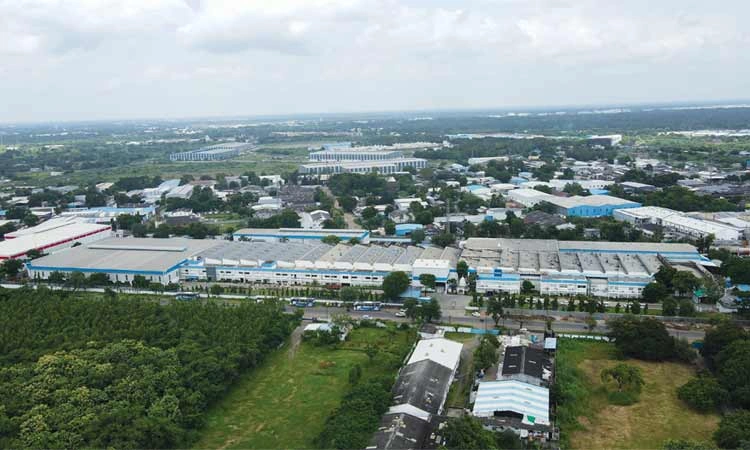
Halol is an important part of our manufacturing capability in India. Minimax fire extinguishers and accessories have been manufactured at the Gunnebo India facility in Halol, and the facility has dedicated infrastructure supporting fire-product manufacturing, testing and development.
The manufacturing approach is built around the Gunnebo Operations System, or GOS, which places emphasis on quality, delivery, cost, resource utilisation, health and safety, and continuous employee engagement and improvement.
For fire protection products, quality cannot be assessed only at the end of the production line. It has to be built into every stage—from material selection and component manufacturing to assembly, filling, testing and final inspection.
The facility has a dedicated quality test laboratory, with capabilities that include testing such as vibration, tapping, oven and salt-spray testing, along with fire-performance testing. The facility also has specialised processes for surface treatment and painting, automated powder filling, and in-house gas filling capabilities for CO2 and clean agent under the applicable approvals.
The manufacturing facility also holds ISO certifications covering quality management, environmental management and occupational health and safety. Our product portfolio carries applicable Indian and international approvals and certifications.
Ultimately, GOS provides the operating framework, while testing, certification, process discipline and continuous improvement provide the evidence of performance. For a customer, this translates into something very important: confidence that the product will perform consistently when it is actually needed.
Q. Fire protection performance depends on product quality, correct installation, maintenance, and regulatory compliance. How does Minimax approach relevant Indian and international standards, certifications, and product validation? What steps are necessary to strengthen compliance with fire safety norms, particularly in older buildings, industrial facilities, and underserved regions?
Fire safety compliance should be viewed as a complete lifecycle rather than a one-time certification exercise.
At Minimax, applicable standards and certifications form an important part of product development, manufacturing and validation. Depending on the product and application, our portfolio includes products conforming to Indian and international requirements, including BIS and other applicable certifications and approvals.
However, a certified product alone does not guarantee a safe installation. The product must be correctly selected, installed, commissioned, inspected and maintained. This is particularly important for older buildings, where fire protection systems may have been designed for a different occupancy or operational profile and may no longer adequately address today’s risks.
For existing facilities, we believe the first step should be a structured fire risk assessment. This should identify changes in occupancy, electrical load, storage, machinery, processes and building use, followed by an evaluation of the adequacy of existing protection.
Maintenance is equally important. Extinguishers and suppression systems need periodic inspection and servicing by trained personnel, with records maintained and deficiencies corrected promptly. Fire drills and employee training also need to be treated as part of the protection system.
For underserved regions, improving compliance will require a combination of awareness, local technical capability, access to quality products, trained service personnel and stronger enforcement. Industry bodies, authorities, consultants, manufacturers and facility owners all have a role to play in closing this gap.
Q. Sustainability is becoming increasingly important in fire protection, especially with the adoption of environmentally conscious extinguishing agents. How is Minimax addressing the environmental impact of its products and manufacturing processes? Could you elaborate on the development and application of Grenoz clean agent technology, and how the Division balances environmental responsibility, safety performance, and lifecycle value?
Sustainability in fire protection has to be approached carefully. Environmental performance is important, but it can never come at the expense of fire suppression performance, human safety or reliability.
One area where we have focused significantly is clean-agent technology. Grenoz® clean agent is used across selected Minimax portable, ceiling-mounted and automatic suppression applications. It is designed for applications where effective suppression with minimal residue and reduced impact on sensitive equipment is important.
Grenoz® is particularly relevant to environments such as server rooms, IT infrastructure, electrical equipment and other sensitive applications where conventional powder-based suppression may create significant clean-up or collateral-damage issues.
The clean-agent approach also supports the industry’s move towards lower environmental impact solutions. Grenoz® has zero ozone-depletion potential and a very low global warming impact, while being UL Listed and FM Approved for relevant applications.
At the manufacturing level, sustainability also involves efficient use of materials and resources, waste reduction, energy optimisation, responsible processes and strong environmental management practices.
For us, the right way to evaluate a fire protection product is therefore across its complete lifecycle—how effectively it protects, how much collateral damage it causes, how reliably it operates, how it is maintained and ultimately how responsibly its materials and processes are managed.
Q. Beyond supplying fire protection products, Minimax emphasizes fire safety awareness, technical support, seminars, and training. How is the Division working with industries, consultants, facility owners, and other stakeholders to improve fire safety knowledge and preparedness? What further initiatives are needed to promote regular system inspection, preventive maintenance, and effective emergency response?
Fire safety is ultimately a people-and-process issue as much as it is a technology issue. Even the most sophisticated system can underperform if people do not understand the risk or know how to respond.
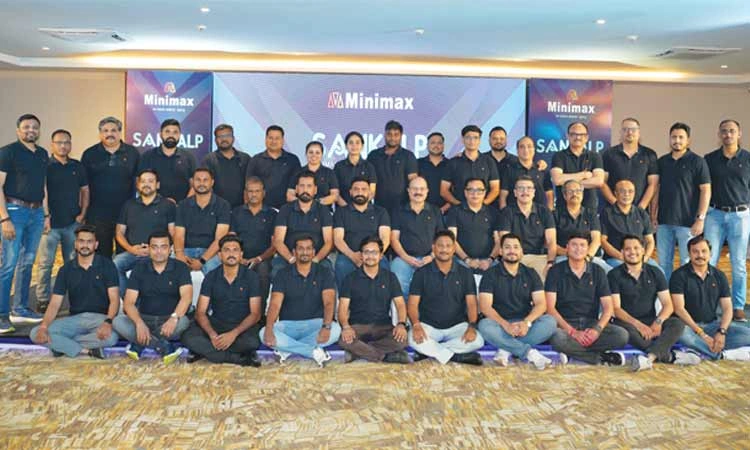
The Minimax sales team actively supports clients through hands-on fire safety training, technical seminars, live fire demonstrations, and on-site surveys. We help facilities evaluate existing fire protection measures, identify safety gaps, and implement tailored solutions aligned with site-specific hazards and standardized maintenance practices.
We also believe preventive maintenance needs to become more systematic. Extinguishers should not simply be inspected when an audit or renewal is due. Organisations should have defined inspection schedules, documented maintenance records and clear accountability for corrective actions.
Training should similarly be practical. Employees need to understand emergency procedures, evacuation routes, alarm response and the correct use of first-response firefighting equipment where applicable. Regular drills help convert a written emergency plan into an actual response capability.
The goal should be to build a culture where fire prevention and preparedness are continuous activities rather than actions taken after an incident or immediately before an audit.
Q. Looking ahead, what are the key growth opportunities for the Minimax Fire Division in India? How do you envision the role of advanced suppression technologies, application-specific solutions, local manufacturing, and service capabilities in meeting the evolving needs of industries and infrastructure projects? What strategic priorities will guide Minimax’s next phase of growth while maintaining its focus on reliability, quality, and protection of life and assets?
India’s growth in manufacturing, infrastructure, data centres, logistics, commercial real estate, hospitality, healthcare and other critical sectors is creating new and increasingly complex fire risks. We see a significant opportunity to contribute to this growth by moving the conversation from conventional firefighting equipment towards application-specific fire risk management.
Advanced suppression technologies will play an increasingly important role, particularly in unmanned and critical areas where early detection and automatic intervention can prevent a small incident from becoming a major operational event. Solutions such as FIRESPOT® and instaproteKt demonstrate how protection can be designed around specific hazards rather than relying on a one-size-fits-all approach.
At the same time, portable and mobile extinguishers will remain fundamental to fire safety. The opportunity is to ensure that these products are correctly selected, appropriately positioned and supported throughout their operating life.
Local manufacturing is another important pillar. It enables greater responsiveness to Indian market requirements, supports supply-chain resilience and allows us to continuously develop products around local applications while maintaining global quality practices.
We also see service and technical support becoming increasingly important. Customers are looking for partners who can support them through assessment, product selection, installation, commissioning, maintenance and training – not simply supply equipment.
Our strategic priorities will therefore remain centred on reliability, application engineering, innovation, local manufacturing, sustainability, service capability and customer education.
Ultimately, our objective is to help create a fire protection ecosystem in which technology, people, processes and standards work together. For Minimax, the next phase of growth is not simply about expanding the number of products we offer; it is about expanding the depth of protection we can provide—helping customers protect people, critical assets and business continuity as India’s risk landscape continues to evolve.