

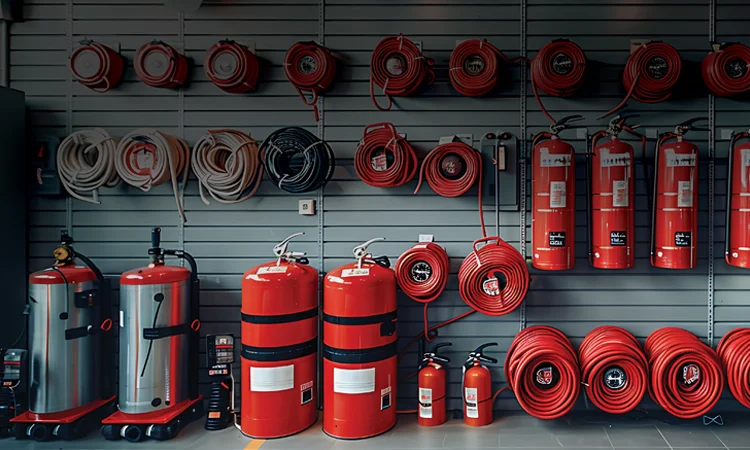
Fire hoses are among the most essential components of firefighting infrastructure, providing a dependable means of delivering water or other compatible extinguishing media to control fires and protect life and property. From industrial plants and warehouses to commercial complexes, residential buildings, ships and municipal fire services, fire hoses play a critical role in emergency response. However, their effectiveness depends not only on their design and performance but also on proper storage, regular inspection and maintenance. As fire safety requirements become more demanding, innovations in hose materials, reel designs, storage cabinets and monitoring technologies are helping organisations improve firefighting readiness while extending equipment service life.
Understanding Fire Hoses and Their Applications
A fire hose is a flexible tube designed to convey water or another compatible firefighting medium under pressure. Its construction must withstand operating pressure, abrasion, temperature variations and the environmental conditions encountered during use.
Fire hoses are generally classified according to their construction and intended application.
Delivery hoses are used to transport water from fire pumps, hydrants or other water sources to the point of application. Many conventional delivery hoses have a textile reinforcement layer and an outer protective covering. Some designs are collapsible, allowing them to be stored compactly when not in use.
Attack hoses are intended for delivering water or firefighting agents directly towards a fire. They must offer an appropriate balance of flexibility, pressure resistance, handling comfort and durability, enabling firefighters to manoeuvre them through buildings and industrial areas.
Suction hoses are designed to draw water into a pump from a tank, reservoir or other source. Unlike ordinary delivery hoses, they must resist collapse under suction conditions and are generally constructed with reinforcement suitable for maintaining their shape.
Hose reels typically carry a semi-rigid hose that remains wound around a rotating drum. They are commonly installed in buildings and industrial facilities to provide a readily accessible first-response firefighting facility. Their use must be appropriate to the anticipated fire hazard and the applicable fire safety requirements.
Selecting the correct hose requires consideration of its diameter, length, working pressure, coupling compatibility, temperature rating and intended application. A hose that is suitable for one duty may not be appropriate for another.
Advances in Fire Hose Materials and Construction
Material innovation is improving the durability and handling characteristics of modern fire hoses. Traditional rubber-lined and textile-reinforced designs are increasingly complemented by advanced elastomers, synthetic fibres and engineered protective coatings.
High-strength synthetic reinforcement can provide pressure resistance while helping control hose weight. Improved internal linings may reduce friction losses, while robust external coverings offer protection against abrasion, oil exposure and environmental deterioration, depending on the material selected.
Lightweight hoses can improve handling and reduce the physical effort required to deploy long lengths. This is particularly valuable for firefighting teams working in high-rise buildings, industrial complexes and confined spaces.
Some specialised hoses are designed to withstand elevated temperatures or exposure to particular chemicals. However, no single hose construction is suitable for every environment. Chemical compatibility, heat exposure, pressure requirements and manufacturer specifications must always guide selection.
Couplings and fittings are equally important. Secure connections, compatible materials and correctly rated fittings help prevent leakage, accidental separation and pressure-related failures. Standardisation of connections across an organisation’s firefighting equipment can also simplify deployment and maintenance.
Fire Hose Storage: More Than a Housekeeping Requirement
Proper storage is fundamental to preserving hose integrity and ensuring immediate availability during emergencies. Incorrect storage can lead to permanent deformation, cracking, mildew, corrosion of fittings and deterioration of protective coatings.
Fire hoses should be stored in designated locations that are clearly identified, readily accessible and protected from unnecessary physical damage. Storage arrangements must allow personnel to retrieve and deploy the equipment quickly without obstruction.
For collapsible hoses, suitable racks or cabinets help maintain orderly arrangements and reduce the risk of kinks and damaging folds. Hoses should be stored in accordance with the manufacturer’s instructions, including any requirements for drying, rolling, folding and periodic repositioning.
Semi-rigid hose reels require secure mounting, free drum rotation and sufficient clearance for complete deployment. Reel cabinets must not prevent access to the valve, nozzle or operating mechanism.
Storage areas should also protect hoses from direct sunlight where prolonged exposure could damage the material, excessive heat, moisture accumulation, sharp edges, corrosive substances and contact with oils or chemicals incompatible with the hose construction.
Importantly, cabinets and enclosures must not obstruct emergency exits, escape routes or access to other firefighting equipment.
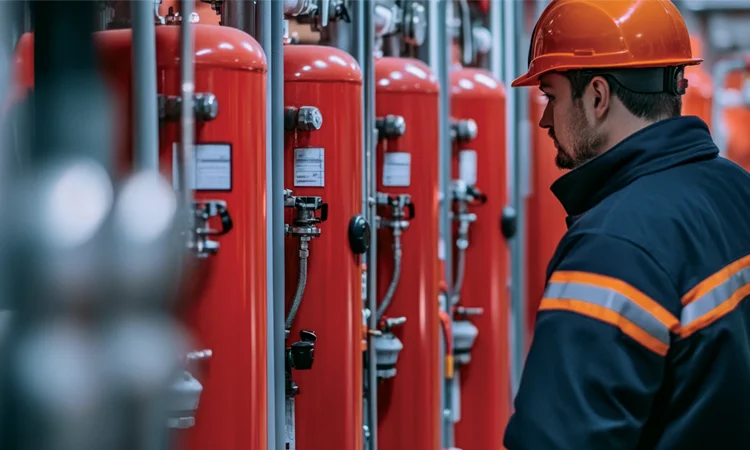
Modern Hose Reels and Storage Cabinets
Fire hose storage solutions are evolving to improve accessibility, durability and ease of inspection.
Wall-mounted hose reels are widely used in commercial and industrial buildings. Their design allows the hose to be deployed quickly while keeping it neatly arranged between inspections. Depending on the configuration, reels may incorporate manual or automatic drum arrangements and integrated shut-off or control valves.
Fire hose cabinets provide enclosed storage for hoses, nozzles, couplings and related accessories. Cabinets manufactured from corrosion-resistant materials can be particularly useful in humid, coastal or industrial environments. Robust hinges, secure latches and clear identification labels improve usability.
Modular storage systems can help large facilities organise multiple hoses and accessories according to location, type and operational function. Clearly marked compartments reduce retrieval time and support systematic equipment checks.
Outdoor installations require additional protection against weather, dust, vandalism and corrosion. At the same time, cabinets must remain accessible to authorised personnel and emergency responders. Their design should balance environmental protection with rapid access.
Smart Monitoring and Digital Maintenance
Digitalisation is beginning to influence how organisations manage firefighting equipment. QR codes, RFID tags and digital asset registers can be used to identify individual hoses, record inspection dates and maintain service histories.
For large industrial facilities, these tools can simplify tracking across multiple buildings, hydrant points and storage locations. Digital inspection checklists can also help maintenance teams document damage, missing accessories, overdue tests and corrective actions.
Some advanced fire protection installations incorporate sensors to monitor selected parameters, such as water pressure, valve position or system status. Connected monitoring can alert facility managers to certain faults or impairments, improving visibility of equipment readiness.
However, digital records and remote monitoring do not replace physical inspection. Hose condition, coupling integrity, nozzle operation and accessibility still require appropriate hands-on checks.
Inspection, Testing and Maintenance
A well-maintained hose is a dependable firefighting asset; a neglected one can become a serious liability. Hoses should be inspected at the intervals required by applicable standards, regulations and manufacturer instructions, as well as after use or exposure to potentially damaging conditions.
Inspection should cover cuts, abrasions, bulges, cracks, leakage, damaged linings, degraded protective coverings and corroded or distorted couplings. Hose reels, cabinets, valves and nozzles should also be checked for proper operation and accessibility.
Pressure testing must be conducted according to the relevant requirements and by competent personnel using suitable equipment. Hoses that fail inspection or testing should be removed from service until appropriately repaired, replaced or formally cleared for use.
After deployment, hoses should be cleaned, drained and dried as appropriate before being returned to storage. Any exposure to chemicals, contaminated water or excessive heat may require additional assessment.
Safety, Compliance and the Way Forward
For Indian facilities, fire hose selection and storage arrangements should be aligned with applicable statutory requirements, relevant BIS standards, the National Building Code and local fire authority conditions. Organisations should maintain records of inspections, tests, repairs and replacements, with clear responsibility assigned to designated personnel.
Fire hoses and their storage systems may appear to be simple components of a larger fire protection installation, but their reliability can determine the success of an emergency response. Investment in quality materials, appropriate storage, accessible layouts and disciplined maintenance helps reduce the likelihood of equipment failure when it matters most.
Ultimately, effective fire hose management is about ensuring that every hose is protected, serviceable and ready for immediate deployment. By combining robust equipment with modern storage solutions, systematic inspections and trained personnel, organisations can strengthen firefighting preparedness and build safer, more resilient workplaces.