

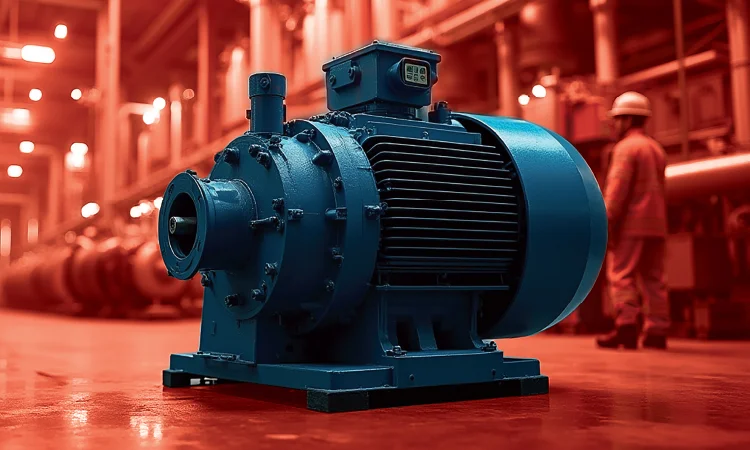
Electric motors are indispensable to modern industrial operations, powering pumps, compressors, conveyors, mixers, fans and a wide range of production equipment. However, in industries where flammable gases, vapours or combustible dust may be present, conventional electric motors can become potential ignition sources. Electrical sparks, excessive surface temperatures and internal faults may trigger fires or explosions, threatening personnel, equipment and business continuity. Flame-proof motors are engineered to operate safely in designated hazardous environments by preventing an ignition originating inside the motor enclosure from igniting the surrounding explosive atmosphere. Their importance is growing across oil and gas, chemicals, pharmaceuticals, paints, mining and other industries where operational reliability must go hand in hand with stringent safety requirements.
Understanding Flame-Proof Motor Technology
A flame-proof motor is designed with a specialised enclosure capable of withstanding an internal explosion and preventing the transmission of ignition to the surrounding atmosphere. Under the Ex d protection concept, an internal ignition may occur, but the enclosure contains the resulting pressure, while precisely engineered flame paths cool escaping combustion gases sufficiently to prevent external ignition under the specified conditions.
Unlike ordinary industrial motors, flame-proof motors incorporate carefully designed housings, joints, terminal boxes and cable-entry arrangements. These components form part of an integrated protection system and must meet applicable certification requirements.
It is important to distinguish flame-proof protection for gases and vapours from protection against combustible dust. Dust-hazard environments may require different protection concepts and specific equipment ratings. Consequently, motor selection must begin with a proper assessment of the hazardous area rather than simply choosing a motor described as explosion-proof.
Critical Design Aspects of Flame-Proof Motors
1. Robust Enclosure Construction
The enclosure is the primary safety feature of a flame-proof motor. Typically manufactured from suitably engineered cast iron, steel or other approved materials, it must withstand the pressure generated by an internal explosion without rupturing or allowing ignition to propagate outside.
The motor frame, end shields, terminal box and associated components must be designed and tested in accordance with the applicable protection requirements. Material strength, wall thickness, fastening arrangements and enclosure geometry are important considerations.
Although robust construction is essential, enclosure strength alone does not establish compliance. The complete design must demonstrate the required explosion protection through appropriate testing and certification.
2. Precision-Engineered Flame Paths
Flame paths are specially designed joints between enclosure components. These interfaces allow hot gases generated during an internal explosion to escape while reducing their temperature before they reach the surrounding atmosphere.
The effectiveness of a flame path depends on parameters such as joint clearance, engagement length, surface finish and dimensional accuracy. Precision machining is therefore critical.
Damage to mating surfaces, corrosion, unauthorised machining or the use of incorrect fasteners can compromise protection. During maintenance, flame paths must be inspected and preserved according to the manufacturer’s instructions and applicable standards.
3. Thermal Management and Temperature Classification
Excessive surface temperature can ignite certain flammable gases, vapours or dusts even in the absence of an electrical spark. Flame-proof motor design must therefore address heat generated by winding losses, bearing friction, mechanical loading and inadequate cooling.
Temperature classification is a key selection parameter. The motor’s maximum permitted surface temperature must be appropriate for the ignition characteristics of the hazardous atmosphere.
Cooling arrangements, winding design, bearing selection and thermal protection devices all contribute to temperature control. Special attention is required when motors operate at low speeds, under variable loads or in elevated ambient temperatures.
4. Electrical Insulation and Terminal Arrangements
Reliable insulation is essential for preventing electrical faults and maintaining motor performance. High-quality winding insulation, appropriate conductor sizing and suitable impregnation systems help improve resistance to electrical, thermal and mechanical stresses.
Terminal boxes require particular attention because electrical connections can become sources of heat or ignition under fault conditions. Cable glands, blanking elements and terminal arrangements must be compatible with the motor’s certified protection concept.
Effective earthing, correctly rated protective devices and proper cable installation are equally important. Replacing certified components with unsuitable alternatives can undermine the integrity of the complete installation.
5. Mechanical Reliability and Environmental Protection
Bearings, shafts, seals and cooling systems must withstand the mechanical demands of continuous industrial operation. Excessive vibration, bearing deterioration and misalignment can increase friction, raise temperatures and contribute to equipment failure.
Suitable ingress protection, corrosion-resistant finishes and appropriate materials are essential in humid, dusty or chemically aggressive environments. Regular monitoring of vibration, temperature and operating current can help identify developing problems before they become serious.
Applications Across Industries
Oil and gas: Flame-proof motors are used in designated hazardous areas of refineries, petrochemical complexes, offshore platforms and gas-processing facilities. Typical applications include pumps, compressors, ventilation systems and material-handling equipment.
Chemical and petrochemical plants: Processes involving flammable solvents, volatile chemicals and combustible vapours may require explosion-protected motors for agitators, mixers, dosing pumps and process machinery.
Pharmaceuticals, paints and coatings: Certain manufacturing operations involve flammable solvents, alcohols and other volatile substances. Appropriately certified motors help reduce ignition risks in designated hazardous production and storage areas.
Mining: Underground mines may contain methane and combustible coal dust. These environments require equipment specifically approved for the relevant mining hazards; a standard industrial flame-proof motor may not be suitable.
Food processing and grain handling: Flour mills, grain elevators, sugar plants and powder-handling facilities can experience combustible-dust hazards. Equipment must be selected according to the applicable dust-protection requirements rather than relying solely on gas flame-proof certification.
Other industrial applications: Flame-proof motors may also be used in fuel storage terminals, paint booths, solvent recovery units and selected waste-processing operations, depending on the area classification and process conditions.
Energy Efficiency and Digital Monitoring
Modern flame-proof motors are increasingly designed to combine safety with energy efficiency. Improved electromagnetic designs, optimised cooling, high-quality bearings and reduced internal losses can lower electricity consumption and lifecycle costs.
Digital monitoring is also gaining importance. Temperature sensors, vibration monitoring and electrical-condition analysis can help identify bearing wear, abnormal loading and developing insulation problems. Predictive maintenance systems use this information to improve service planning and reduce unplanned downtime.
Variable-frequency drives offer additional opportunities for energy savings and process control. However, the motor-drive combination must be suitable for the hazardous-area application. Speed variations can affect cooling and surface temperature, so the complete arrangement must comply with the relevant certification and operating restrictions.
Standards, Certification and Maintenance
In India, the applicable IS/IEC 60079 series provides important requirements for equipment used in explosive atmospheres. IEC 60079-1 specifically addresses protection by flame-proof enclosures, while other parts cover general requirements and alternative protection methods.
Selection should consider the hazardous-area classification, gas or dust group, temperature requirements, equipment protection level, ambient conditions and operating duty. Certification and equipment marking must be verified against the intended application.
Maintenance is equally critical. Flame paths must remain undamaged, cable entries must retain their integrity, and repairs must be undertaken by competent personnel using approved procedures. Unauthorised modifications can invalidate the motor’s protection.
Conclusion
Flame-proof motors are vital to safe and dependable industrial operations wherever explosive atmospheres may occur. Their performance depends on robust enclosure construction, precision-engineered flame paths, effective thermal management, reliable electrical connections and appropriate certification.
As industries embrace energy-efficient equipment and predictive maintenance, these motors are evolving into more efficient and intelligently monitored assets. Nevertheless, technological advances must never compromise explosion protection.
The key to safe operation lies in selecting the right motor for the hazard, installing it correctly and maintaining its certified protection throughout its service life. This approach safeguards personnel, protects valuable assets and supports reliable industrial productivity.