

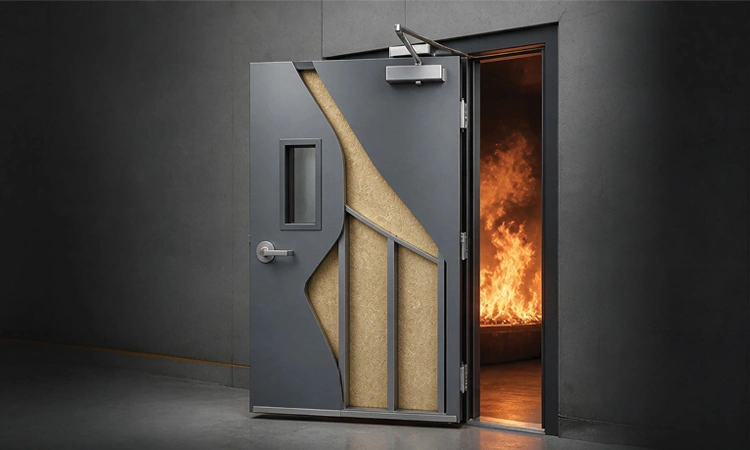
In any fire emergency, the ability to contain flames and smoke can make the difference between a minor incident and a catastrophic disaster. While active fire protection systems such as sprinklers, fire alarms and suppression systems play a vital role in detecting and extinguishing fires, fire doors are an equally important component of passive fire protection. Designed to resist the spread of fire and smoke for a specified period, fire doors protect escape routes, compartmentalize buildings and provide valuable time for occupants to evacuate safely. Today, fire doors are widely installed in industrial facilities, commercial buildings, hospitals, hotels, educational institutions, data centres and residential complexes. Manufactured using advanced materials and engineered to stringent performance standards, they form an indispensable element of a comprehensive fire safety strategy.
What is a Fire Door?
A fire door is a specially engineered door assembly designed to withstand fire exposure for a predetermined duration, typically ranging from 30 minutes to 240 minutes, depending on the application and building regulations. Unlike ordinary doors, fire doors are tested as complete assemblies, including the door leaf, frame, hardware, glazing, seals and closing mechanisms.
When exposed to fire, a properly installed fire door limits the spread of flames, smoke and hot gases, thereby protecting occupants, reducing property damage and allowing firefighters to control the incident more effectively.
Materials of Construction (MOC)
The performance of a fire door largely depends on the materials used in its construction. Different applications require different combinations of materials to achieve the desired fire resistance, durability and aesthetic appeal.
Steel Fire Doors
Steel fire doors are among the most commonly used in industrial and commercial environments. Constructed from galvanized or stainless steel sheets with insulated cores, they offer excellent fire resistance, high structural strength and impact resistance.
Typical applications include:
- Manufacturing plants
- Power stations
- Chemical industries
- Warehouses
- Utility rooms
- Industrial stairwells
Steel doors are particularly suitable for areas subjected to heavy usage and harsh environmental conditions.
Timber Fire Doors
Fire-rated timber doors combine aesthetics with fire protection. These doors are manufactured using specially treated hardwood or engineered timber cores enclosed within fire-resistant facings.
They are widely used in:
- Office buildings
- Hotels
- Educational institutions
- Hospitals
- Residential apartments
Modern timber fire doors provide an attractive appearance while meeting stringent fire performance requirements.
Glass Fire Doors
Advancements in fire-resistant glazing have enabled the development of glass fire doors that offer both visibility and protection. Special fire-rated glass, combined with steel or aluminium framing systems, maintains compartment integrity while allowing natural light and improved visibility.
These doors are frequently installed in:
- Shopping malls
- Airports
- Commercial complexes
- Healthcare facilities
- Corporate offices
They also facilitate safer evacuation by enabling occupants to assess conditions on the opposite side of the door.
Aluminium Fire Doors
Fire-rated aluminium doors combine lightweight construction with corrosion resistance and modern aesthetics. When used with fire-resistant glazing and insulated cores, they provide reliable fire protection in commercial environments where appearance is an important consideration.
Core Materials
The core of a fire door largely determines its fire resistance.
Common core materials include:
- Mineral wool insulation
- Rock wool
- Ceramic fibre boards
- Gypsum-based cores
- Vermiculite boards
- Calcium silicate boards
- Honeycomb fire-resistant structures
These materials possess low thermal conductivity and maintain structural stability under high temperatures, delaying heat transfer and preserving the integrity of the door assembly during a fire.
Essential Features of Fire Doors
Modern fire doors incorporate several engineered features that distinguish them from conventional doors.
Fire Resistance Rating
Every certified fire door carries a fire resistance rating indicating the duration for which it can withstand fire exposure. Common ratings include 30, 60, 90, 120 and 240 minutes, depending on the occupancy type and fire compartmentation requirements.
Intumescent Seals
One of the most important components of a fire door is the intumescent seal. Installed around the edges of the door or frame, this material expands dramatically when exposed to heat, sealing the gap between the door and frame. This prevents flames and hot gases from passing through, maintaining the fire compartment’s integrity.
Smoke Seals
Smoke inhalation is a leading cause of fatalities in fire incidents. Fire doors are therefore often fitted with smoke seals that block the passage of toxic smoke during the early stages of a fire, helping to keep escape routes safer for occupants.
Self-Closing Mechanisms
Fire doors are designed to remain closed during a fire. Hydraulic or spring-operated door closers ensure the door automatically shuts after being opened, preventing the spread of fire and smoke through open doorways.
Fire-Rated Hardware
Every component of the door assembly must be fire rated, including:
- Hinges
- Locks
- Handles
- Panic exit devices
- Door selectors
- Latches
- Vision panels
These accessories are tested alongside the door assembly to ensure reliable operation during fire exposure.
Fire-Resistant Glazing
Where visibility is required, specially designed fire-resistant glass is incorporated into the door. Unlike ordinary glass, these glazing systems remain intact for the specified fire rating and limit heat transmission, thereby preserving compartmentation and aiding safe evacuation.
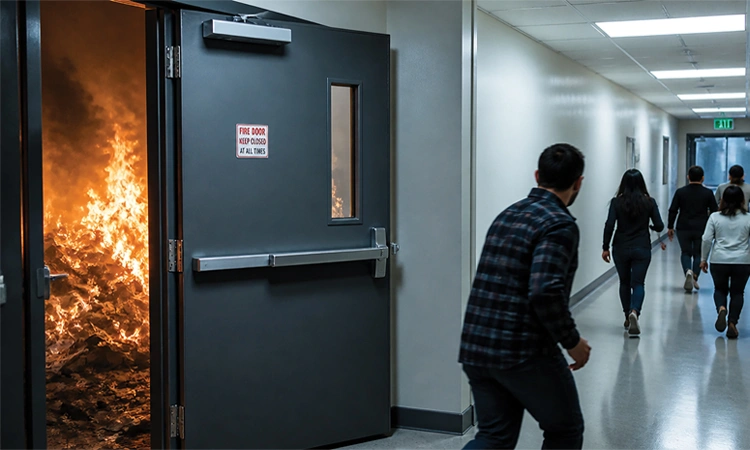
How Fire Doors Protect Buildings
Fire doors play several crucial roles during a fire emergency.
Compartmentation
Modern buildings are divided into fire compartments using fire-resistant walls and doors. If a fire breaks out, the fire door confines it to the affected compartment, slowing its spread to adjacent areas. This containment strategy reduces property damage and allows emergency responders to tackle the fire more effectively.
Protecting Escape Routes
Fire doors safeguard staircases, corridors and exit passages by preventing flames and smoke from entering evacuation routes. This provides occupants with valuable time to exit the building in an orderly manner.
Smoke Control
Even relatively small fires can generate large volumes of toxic smoke. Properly sealed fire doors significantly reduce smoke migration, improving visibility and reducing the risk of smoke inhalation.
Asset Protection
In industrial facilities, fire doors protect high-value equipment, production lines, electrical switchgear, server rooms and hazardous material storage areas. By limiting fire spread, they help reduce repair costs, equipment loss and production downtime.
Supporting Firefighters
Compartmentalizing a fire enables firefighters to focus their efforts on a confined area rather than battling a rapidly spreading blaze. This improves operational safety and enhances the effectiveness of firefighting operations.
Applications Across Industries
Fire doors are now standard safety features in a wide range of sectors, including:
- Manufacturing plants
- Pharmaceutical facilities
- Food processing industries
- Oil and gas installations
- Warehouses and logistics centres
- Hospitals and healthcare facilities
- Educational institutions
- Hotels and hospitality establishments
- Shopping malls
- Airports and railway stations
- Data centres
- High-rise residential buildings
Each application requires fire doors with ratings and features tailored to the specific fire hazards and occupancy needs.
Inspection and Maintenance
A fire door is only effective if it remains in proper working condition. Regular inspection and maintenance are therefore essential. Key checks include ensuring that the door closes fully without obstruction, intumescent and smoke seals are intact, hinges and hardware are secure, glazing is undamaged and no unauthorized modifications have been made. Routine maintenance should also verify that door frames remain correctly aligned and that gaps around the door comply with the manufacturer’s specifications. Damaged components must be replaced only with certified fire-rated parts to preserve the integrity of the door assembly.
Emerging Trends
Technological advancements are making fire doors smarter and more efficient. Electromagnetic hold-open devices linked to fire alarm systems allow doors to remain open during normal operation but close automatically when an alarm is triggered. Smart monitoring systems equipped with sensors can continuously check door status, identify faults and send maintenance alerts to facility managers. Manufacturers are also introducing lighter composite materials, enhanced fire-resistant glazing, improved corrosion-resistant finishes and environmentally sustainable insulation materials to meet evolving safety and sustainability goals.
Conclusion
Fire doors are far more than ordinary building components-they are engineered life safety systems that play a decisive role in containing fire, restricting smoke movement and protecting occupants. Constructed from fire-resistant materials and equipped with features such as intumescent seals, smoke seals, self-closing mechanisms and certified hardware, they help maintain compartmentation and safeguard critical escape routes during emergencies.
Whether installed in a factory, hospital, commercial complex or residential building, fire doors significantly enhance overall fire protection. When integrated with active systems such as fire alarms, sprinklers and smoke management systems, they create a comprehensive defence against fire, helping save lives, protect valuable assets and ensure business continuity. As buildings become more sophisticated and safety regulations more demanding, the importance of high-quality, properly maintained fire doors will only continue to grow.