

Fire remains one of the most serious hazards in industrial, commercial and institutional facilities. From manufacturing plants and warehouses to data centres, hospitals and high-rise buildings, the consequences of an uncontrolled fire can be devastating-resulting in loss of life, damage to assets, business interruption and environmental impact. While passive fire protection measures such as fire-resistant walls, doors and compartmentalization help contain the spread of fire, Active Fire Protection (AFP) systems are designed to detect, control and extinguish fires automatically or with human intervention. With advances in sensing technologies, automation and digital connectivity, active fire protection systems have evolved into intelligent, highly reliable safety solutions that form an indispensable part of modern building and industrial infrastructure.
What is Active Fire Protection?
Active Fire Protection refers to systems and equipment that require some form of action-automatic, manual or both-to detect, alert occupants, suppress or extinguish a fire. These systems are engineered to respond quickly to fire incidents, minimizing damage and providing occupants sufficient time to evacuate safely.
Unlike passive protection, which remains dormant until exposed to fire, active systems continuously monitor the environment and become operational immediately upon detecting smoke, heat or flames.
A comprehensive AFP strategy generally includes detection systems, alarm systems, suppression equipment, emergency communication systems and fire-fighting accessories.
Key Components of Active Fire Protection
Fire Detection Systems
The first line of defence is early fire detection. Modern detection systems employ a variety of sensors to identify fire in its incipient stage. Common detector types include:
- Smoke detectors
- Heat detectors
- Flame detectors
- Multi-criteria detectors combining smoke, heat and gas sensing
- Aspirating smoke detection systems for critical environments
Early detection enables rapid response, often preventing a small incident from escalating into a major disaster.
Fire Alarm Systems
Once a fire is detected, alarm systems notify occupants and emergency responders. Today’s intelligent fire alarm panels can identify the exact location of a fire, enabling quicker intervention.
Modern alarm systems incorporate:
- Audible sirens
- Visual strobes
- Voice evacuation systems
- Emergency messaging
- Remote monitoring through centralized control rooms
Integration with building management systems allows
coordinated emergency response.
Automatic Fire Suppression Systems
Perhaps the most recognizable active protection systems are automatic suppression systems designed to extinguish or control fires before they spread.
Automatic Sprinkler Systems
Automatic sprinklers remain the most widely used fire suppression solution. Contrary to popular belief, only sprinklers exposed to sufficient heat activate, reducing unnecessary water discharge.
Modern sprinkler technologies include:
- Wet pipe systems
- Dry pipe systems
- Deluge systems
- Pre-action systems
- Foam-water sprinkler systems
Sprinklers have consistently demonstrated their effectiveness in reducing fire losses across industries.
Water Mist Systems
Water mist systems produce microscopic droplets that rapidly absorb heat and reduce oxygen concentration around the flame. Compared to conventional sprinklers, these systems consume significantly less water while minimizing water damage.
Water mist is increasingly used in:
- Heritage buildings
- Marine applications
- Power plants
- Turbine rooms
- Hospitals
- Data centres
Clean Agent Suppression
Where water could damage sensitive equipment, clean agent systems offer an excellent alternative. These systems discharge environmentally acceptable gaseous agents that suppress fires without leaving residue.
Applications include:
- Data centres
- Electrical control rooms
- Telecommunication facilities
- Archives
- Museums
- Laboratories
The absence of residue allows rapid restoration of operations after discharge.
Foam Fire Suppression
Industries handling flammable liquids rely heavily on foam systems. Foam forms a blanket over fuel surfaces, separating fuel from oxygen while cooling the burning liquid.
Typical applications include:
- Oil refineries
- Petrochemical facilities
- Aircraft hangars
- Tank farms
- Fuel storage depots
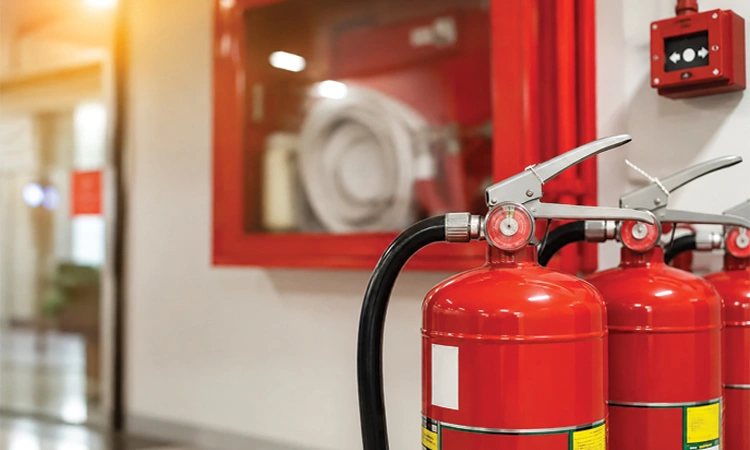
Portable Fire Extinguishers
Portable extinguishers remain one of the simplest yet most effective active protection devices. They allow trained personnel to tackle small fires before they become uncontrollable.
Different extinguisher types are designed for specific fire classes:
- Water
- Foam
- Dry chemical powder
- Carbon dioxide
- Clean agent
- Wet chemical
Proper selection, placement and regular maintenance are essential for effective performance.
Intelligent Fire Protection
Digital transformation is reshaping fire safety.
Today’s AFP systems increasingly incorporate:
- Internet of Things (IoT) connectivity
- Artificial Intelligence (AI)
- Cloud-based monitoring
- Wireless sensors
- Predictive maintenance
- Remote diagnostics
Smart sensors continuously monitor environmental conditions and instantly communicate abnormal events to central monitoring stations.
Artificial intelligence helps distinguish between genuine fire incidents and false alarms, improving system reliability.
Integration with Building Management Systems
One of the biggest advancements in fire protection is system integration.
When a fire is detected, interconnected systems automatically perform several actions simultaneously:
- Activate alarms
- Release emergency exits
- Shut down HVAC systems
- Operate smoke extraction systems
- Stop elevators at designated floors
- Unlock emergency escape routes
- Notify emergency responders
- Display evacuation guidance
This coordinated response significantly improves occupant safety.
Fire Protection in Industrial Facilities
Industrial environments present unique fire risks involving combustible materials, electrical installations, chemicals and high-energy machinery.
Modern manufacturing plants increasingly deploy:
- Flame detection cameras
- Linear heat detection cables
- Infrared monitoring
- Explosion suppression systems
- Spark detection systems
- Automatic conveyor suppression
Local application suppression for CNC machines and electrical cabinets
Critical industries including pharmaceuticals, food processing, automotive manufacturing and electronics require highly specialized fire protection solutions tailored to their operational risks.
Environmental Considerations
Environmental sustainability has become an important aspect of fire protection.
Manufacturers are developing systems that:
- Reduce water consumption
- Use environmentally acceptable suppression agents
- Minimize greenhouse gas emissions
- Lower maintenance requirements
- Improve energy efficiency
The transition away from ozone-depleting agents has accelerated innovation in clean agent technologies that offer high fire suppression performance with reduced environmental impact.
Inspection and Maintenance
Even the most sophisticated fire protection system is effective only if properly maintained.
Regular inspection includes:
- Detector testing
- Alarm verification
- Pump testing
- Valve inspection
- Pipe integrity checks
- Pressure monitoring
- Control panel diagnostics
- Extinguisher servicing
Many facilities now employ digital maintenance platforms that automatically schedule inspections and generate compliance reports.
Compliance with Standards
Active fire protection systems must comply with national and international codes and standards. These cover system design, installation, testing and maintenance, ensuring consistent performance under emergency conditions.
Compliance also helps organizations meet insurance requirements, occupational safety regulations and statutory fire safety approvals.
The Road Ahead
The future of active fire protection lies in intelligent, predictive and connected systems. Artificial intelligence, machine learning and digital twins are expected to enable predictive fire risk analysis, allowing organizations to identify hazards before ignition occurs. Autonomous inspection robots, drone-assisted monitoring and advanced thermal imaging are also poised to strengthen fire safety in large industrial complexes.
Battery energy storage systems, electric vehicle manufacturing, hydrogen infrastructure and smart factories are creating new fire protection challenges that demand specialized suppression technologies. Consequently, fire safety solutions will become increasingly application-specific, digitally integrated and data-driven.
Conclusion
Active fire protection systems have evolved far beyond conventional alarms and sprinklers. They now represent sophisticated, interconnected safety ecosystems capable of detecting, communicating and suppressing fires with remarkable speed and precision. By combining advanced detection technologies, automated suppression systems, intelligent monitoring and integrated emergency response, these systems play a pivotal role in protecting lives, safeguarding assets and ensuring business continuity.